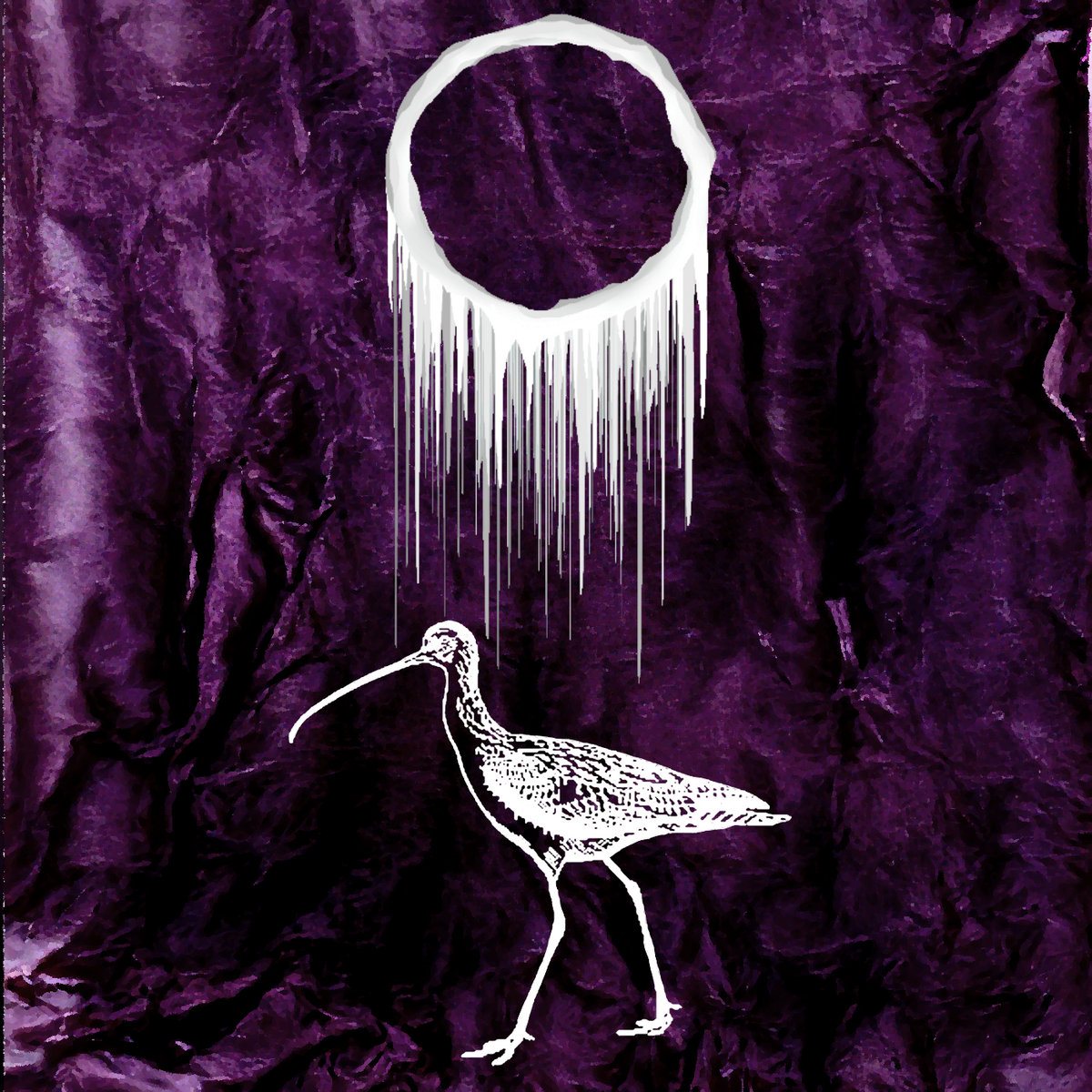
Alice Simard has released something like a hundred records since 2019, spread across twenty-seven different names, and she still says Exhaustion, the second album she made as R'luhh, is one of the best things she has done.
She made it in 2022, alone, during the isolation of the pandemic, before she had taught herself how to sing in a black metal register — which is why Exhaustion is entirely instrumental, guitars carrying the weight a voice usually would.
She was also, for the first time, letting herself think about transitioning.
In her own account she was lonely and it shows: the record leans hard into the mopier end of black metal without quite committing to the genre's most self-annihilating subgenre, depressive black metal, or DSBM. The guitar tone and the thin, wandering lead lines borrow directly from Arizmenda's 2011 album Without Circumference Nor Center, which she was listening to obsessively at the time and which supplies most of Exhaustion's emotional temperature.
The album's one acoustic piece, “Portrait de soi-même en si mineur” — self-portrait in B minor — is older than everything around it, written two years earlier for a different project that never got finished and was folded into R'luhh instead. It fits so well you would not know it was a leftover.
Simard taught herself guitar at eleven, working out Death's Suicide Machine by ear, and has never taken a lesson since; the same doggedness now runs twenty-seven active projects at once, from the tech-death of Vitrified Entity to the funeral doom of Memorandum to the video-game covers she records as Plagueling, each one a different set of rules for the same restless hands.
None of this is a side-project in the usual sense: each alias has its own scene, its own sound, its own audience, often unaware the others exist. R'luhh's people are not necessarily Plagueling's people, and that is rather the point — bedroom black metal, at its most prolific edges, behaves less like a discography and more like several different careers running in parallel inside one laptop. Her physical editions, when they exist, tend to arrive as hand-numbered cassettes through small European labels such as Canti Eretici Productions, and they sell out fast.
Looking back at Exhaustion now, she calls her own writing from that period immature, then immediately takes it back: the album, she says, aged well, and four years on it is not hard to hear why — the mopiness is unresolved and a little raw, but the ear behind it, arranging the same three chords into something that keeps building without ever quite peaking, is already fully formed.