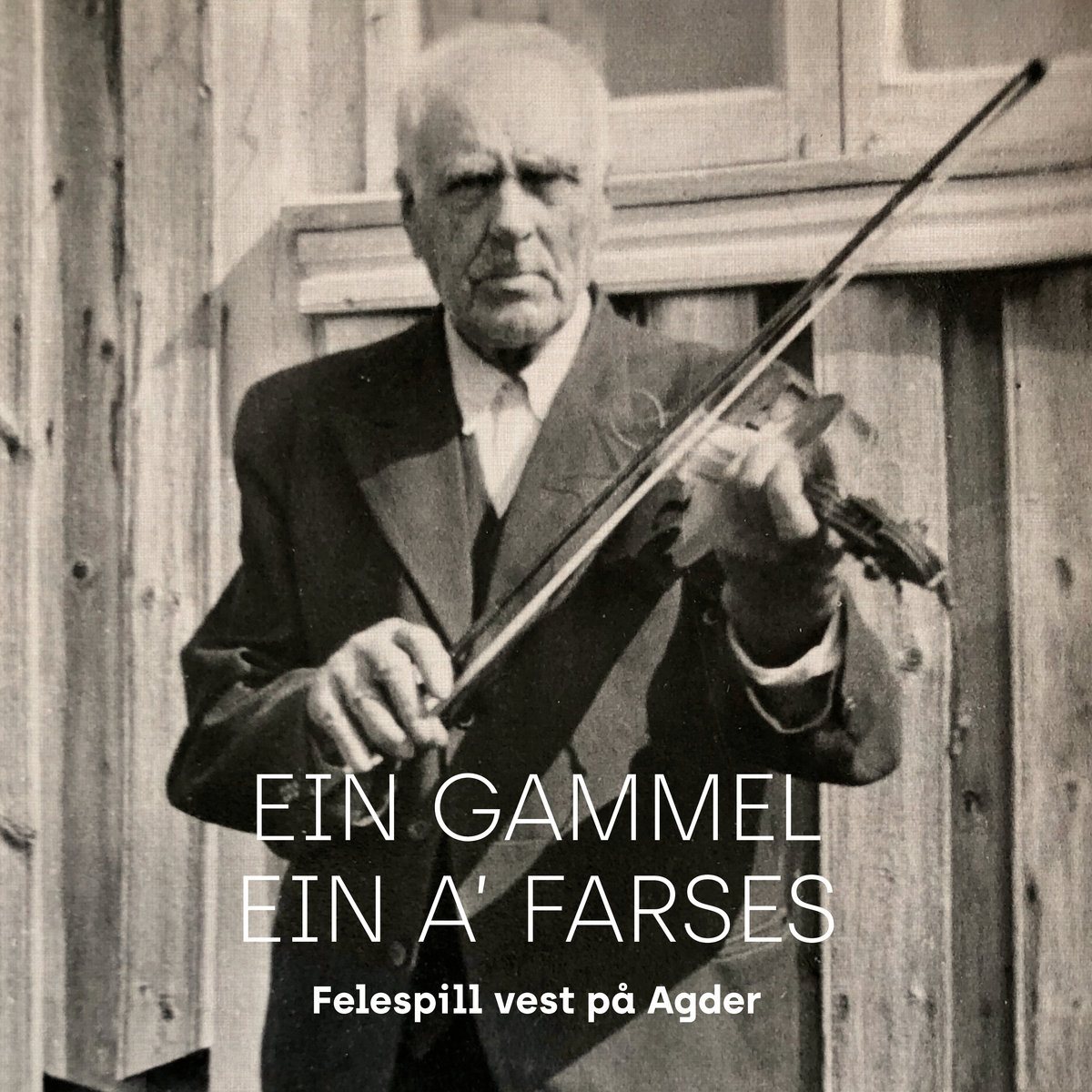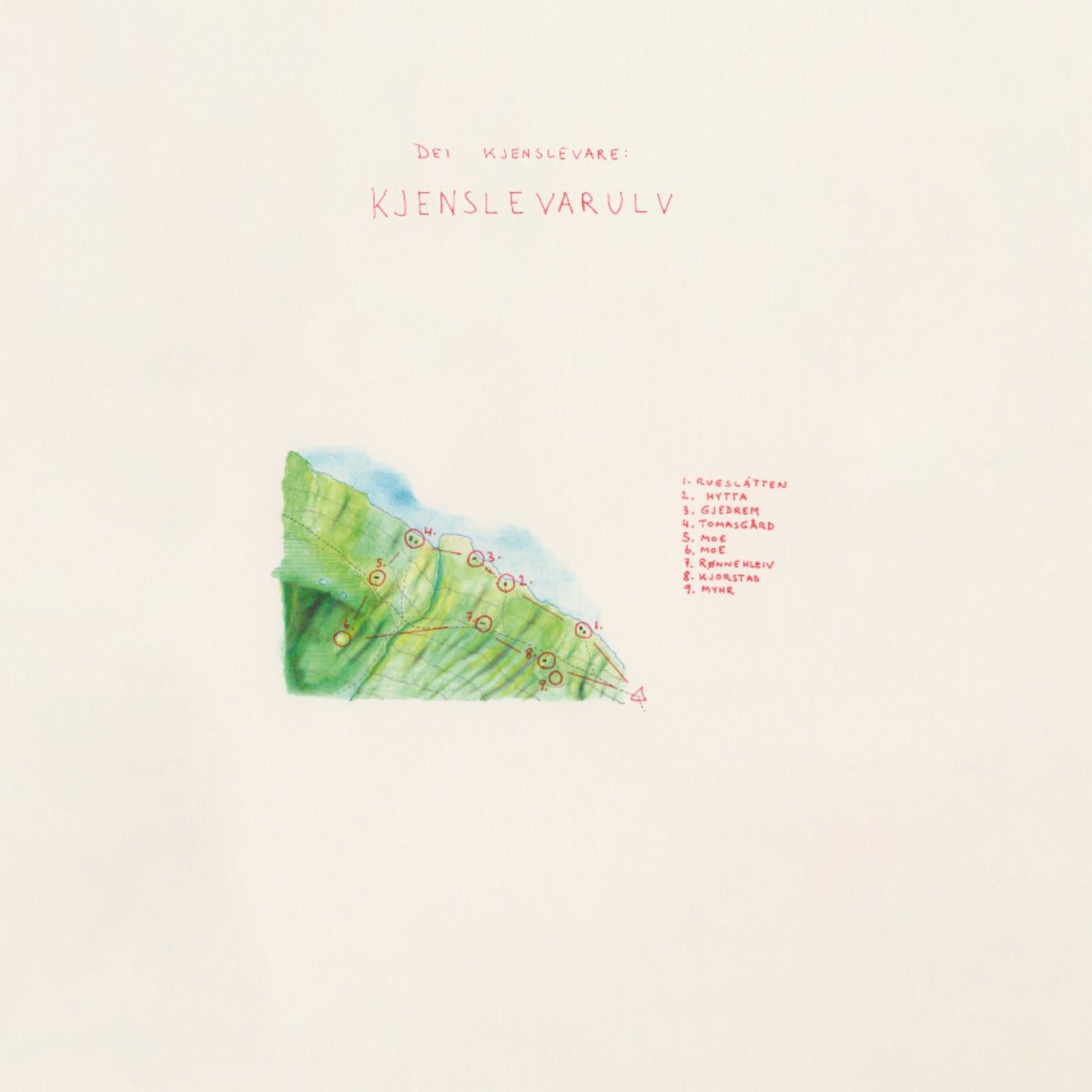
The Hardanger fiddle already sounds like more than one instrument. Beneath its four playing strings sits a second set of sympathetic strings that ring without being touched, so every note arrives with its own halo. Dei Kjenslevare, a nine-piece based in Oslo, treat that halo as the whole point. On Kjenslevarulv, released on vinyl by Motvind Records in February 2022, six of those fiddles are tuned, bowed and left to hum until the overtones become the music and melody, where it appears at all, is beside the point.
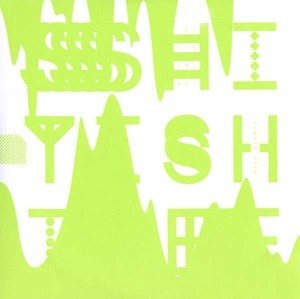
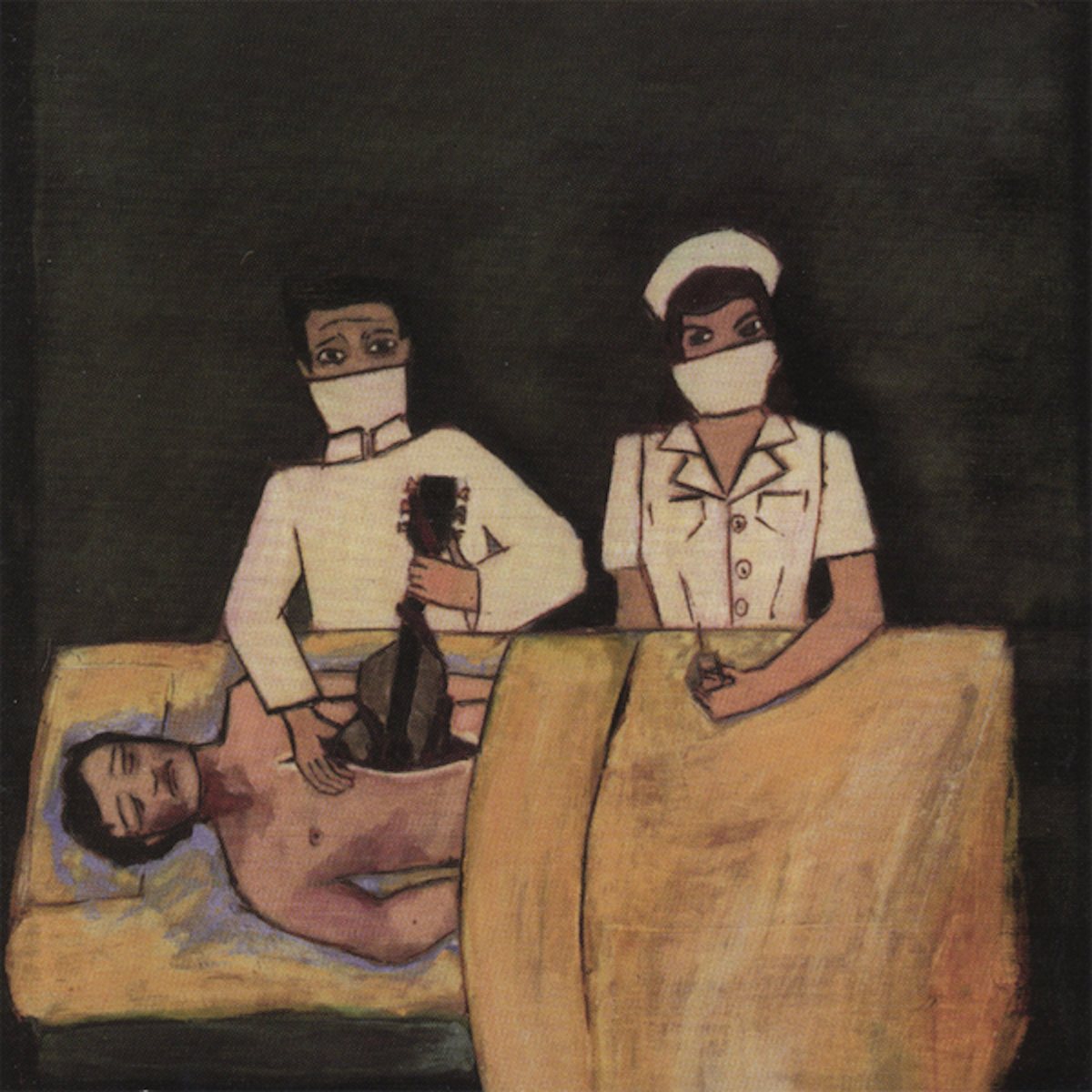
The fiddlers are a deliberate mix. Ole-Henrik Moe and Kari Rønnekleiv come from the far end of Norwegian improvisation, the pair who work together as Sheriffs of Nothingness; Moe also picks up trumpet, banjo and double bass, and painted the cover. Rasmus Kjorstad and Helga Myhr, who play together in Morgonrode, join Anne Hytta and Marianne Tomasgård on the traditional side, bringing the regional tunings that once told one valley's fiddling from the next. Around them Tore Gjedrem works a prepared piano, Laura Marie Rueslåtten strikes handbells and desk bells, and Eilif Moe plays banjo and, as the credits put it, beer cans.
The six pieces were recorded by Gjedrem at Kolben Kulturhus in Kolbotn in February 2020 and mastered by Audun Strype in Oslo a year and a half later. The opener, Tidleg hulder, runs past eleven minutes; nothing here is shorter than five. The fiddles pile up into thick chords in which no two instruments quite agree, and the disagreement is the pleasure, a beating, sour shimmer closer to drone music than to anything played at a Norwegian dance. When the bows finally slash and scrape against metal, it feels less like a change of mood than a change of weather.
The band's own notes lay out the lineage frankly: on one side the old fiddlers Andres K. Rysstad and Erling Kjøk and the langeleik scales Erik Eggen wrote down a century ago; on the other Scelsi, Xenakis, La Monte Young, Tony Conrad and the spectralists Grisey, Murail and Haas. The opener's full title even puns on Haas and Conrad. The bridge between the camps is Eivind Groven, the composer who built an organ tuned to the overtone series so that folk tonality and art music could share a keyboard. Dei Kjenslevare are essentially that organ rebuilt from horsehair and spruce.
Kjenslevarulv is the fourth entry in Motvind's series of perspectives on Norwegian folk music, and it makes the series' argument better than any essay: the archaic tunings were not a primitive stage on the road to equal temperament but a sound world of their own. The catch is that it asks a lot. There are no tunes to hold on to and the pieces move at the speed of resonance. Give it a quiet room and it repays the attention; give it half an ear and it will simply hum past you.