Cecil Taylor, George Russell, Paul Bley and Ran Blake all wrote liner notes for the same record. That alone tells you something about the regard Joe Maneri commanded among musicians who owed him nothing and rarely agreed on much else.
Maneri had earned it the slow way. Born in Brooklyn in 1927, he grew up playing Italian, Greek, Turkish, Syrian, Jewish, Polish and Irish repertoire alongside bebop, the kind of immigrant-neighbourhood apprenticeship that leaves a player unable to hear twelve equal semitones as the only option. He spent 37 years teaching at the New England Conservatory, where students including John Medeski, Marty Ehrlich, Eyvind Kang, Matana Roberts and Matthew Shipp passed through his classroom, and where he worked out, then codified, a system dividing the octave into 72 equal steps rather than the usual twelve. In 1988 he founded the Boston Microtonal Society to give the theory an institutional home.
For most of that time he barely performed outside the academy.
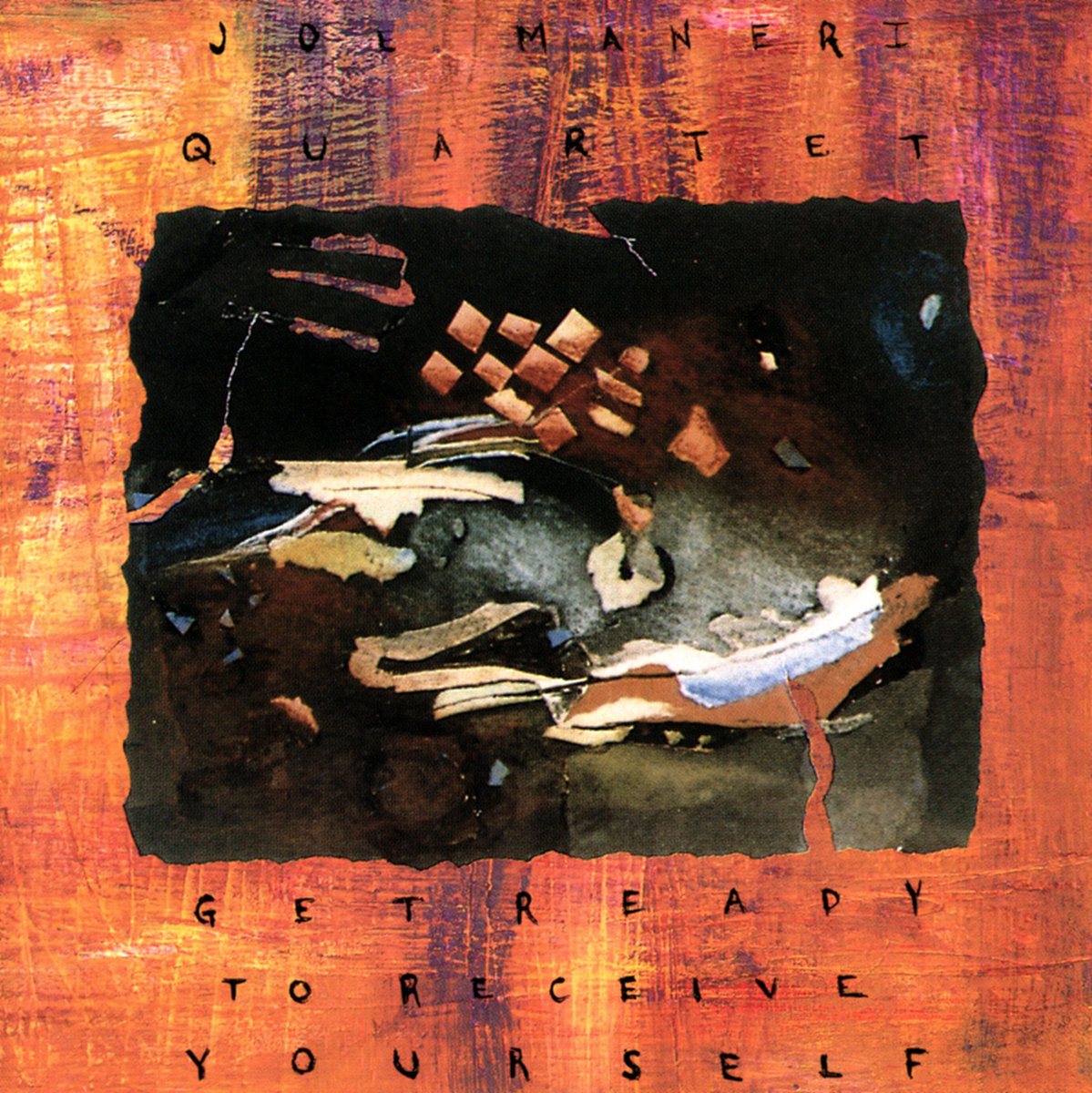
It was his son, the violinist Mat Maneri, who pushed him back onto stages in the late 1980s, and the two built a quartet with bassist John Lockwood and drummer Randy Peterson that developed a cult Boston following before touring internationally by 1993. Get Ready To Receive Yourself, recorded that year at Personasound and released in 1995 on Leo Feigin's Leo Records, is the document that made the case in full. Joe's tenor and clarinet lines slide between the cracks of the scale rather than landing on its pitches, gruff multiphonics giving way without warning to something tender, while Mat's violin tracks those microtonal bends with an intimacy that only a lifetime of listening to his father could produce.
The record sits inside a lineage that runs back to Maneri's own Paniots Nine, an early experiment in the same language recorded in 1963 and left unreleased for 35 years, and forward to the two decades of father-son recordings that followed. What separates Get Ready To Receive Yourself from academic microtonal exercises elsewhere is how little it sounds like theory. The quarter-tones and eighth-tones are not a demonstration; they are simply how Maneri hears, and the quartet swings, drags and worries at standards and originals alike as though 72 notes to the octave were the obvious choice all along.