
Falling In Reverse have spent much of their career behaving as though genre were less a tradition than raw material. Formed in Las Vegas in 2008 around vocalist Ronnie Radke, the band emerged from the same post-hardcore ecosystem that produced Radke's former group Escape the Fate. Their 2011 debut, The Drug in Me Is You, established the essentials: theatrical hooks, serrated guitars and a frontman willing to turn his own turbulence into public spectacle.
What followed was less a steady evolution than a series of mutations. Fashionably Late introduced conspicuous electronic and hip-hop elements; Coming Home reached toward atmospheric alternative rock. By the time Falling In Reverse arrived at Popular Monster in 2024, after seven years without a full-length album, stylistic whiplash had become the method itself. Metalcore breakdowns could collide with rap cadences, orchestral passages, electronics and enormous pop choruses, sometimes within a single track.
That volatility separates Falling In Reverse from much of contemporary heavy music. Radke is interested in songs as events: sudden structural turns, exaggerated dynamics and hooks designed at arena scale. Longtime collaborator Tyler Smyth has been crucial to translating that instinct into records whose density remains unusually controlled. On Popular Monster, the approach reached its most concentrated form, while guests including Jelly Roll on All My Life, Tech N9ne and Slaughter to Prevail's Alex Terrible on Ronald expanded the band's vocabulary beyond conventional rock collaborations. The album reached No. 12 on the Billboard 200, their highest US album position to that point.
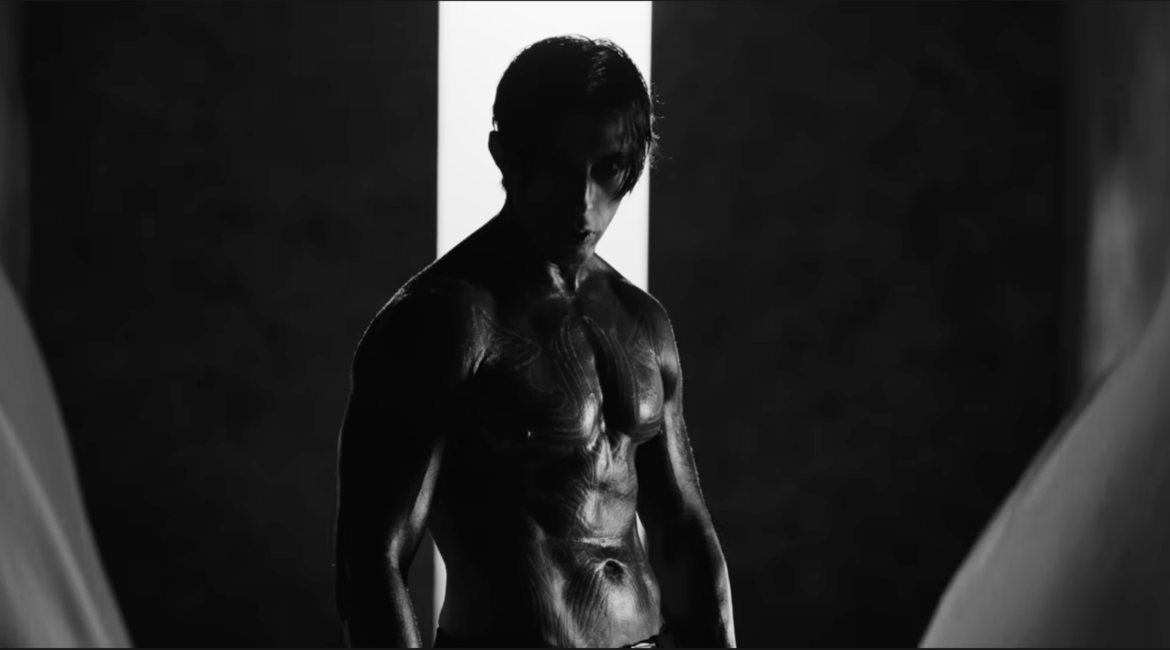
God Is A Weapon, released through Epitaph in May 2025, pushed the band's fascination with scale into darker territory. Co-written by Radke, Smyth, Cody Quistad and Marilyn Manson, it places Manson opposite Radke in a slow-burning piece of industrial-tinged heavy rock. Instead of simply stacking riffs, the production uses space and restraint before allowing the chorus to widen dramatically. Jensen Noen's black-and-white video mirrors that architecture with barren landscapes, religious iconography and apocalyptic tableaux, treating both singers less as conventional performers than characters inside a private mythology.
The band's next move made that collaborative instinct even more conspicuous. September 2026's Joseph brings Corey Taylor and Serj Tankian together on the same recording for the first time. Moving through piano, falsetto, electronics, spoken passages and violent guitar eruptions, it is deliberately unstable music, closer to a sequence of scenes than a traditional rock single.
That may be Falling In Reverse's most revealing characteristic. Nearly two decades in, Radke has turned a Las Vegas post-hardcore band into something closer to a multimedia vehicle, where metal, internet-age provocation and blockbuster music-video aesthetics continually feed one another. The excess is not decoration around the music. Increasingly, it is the music.