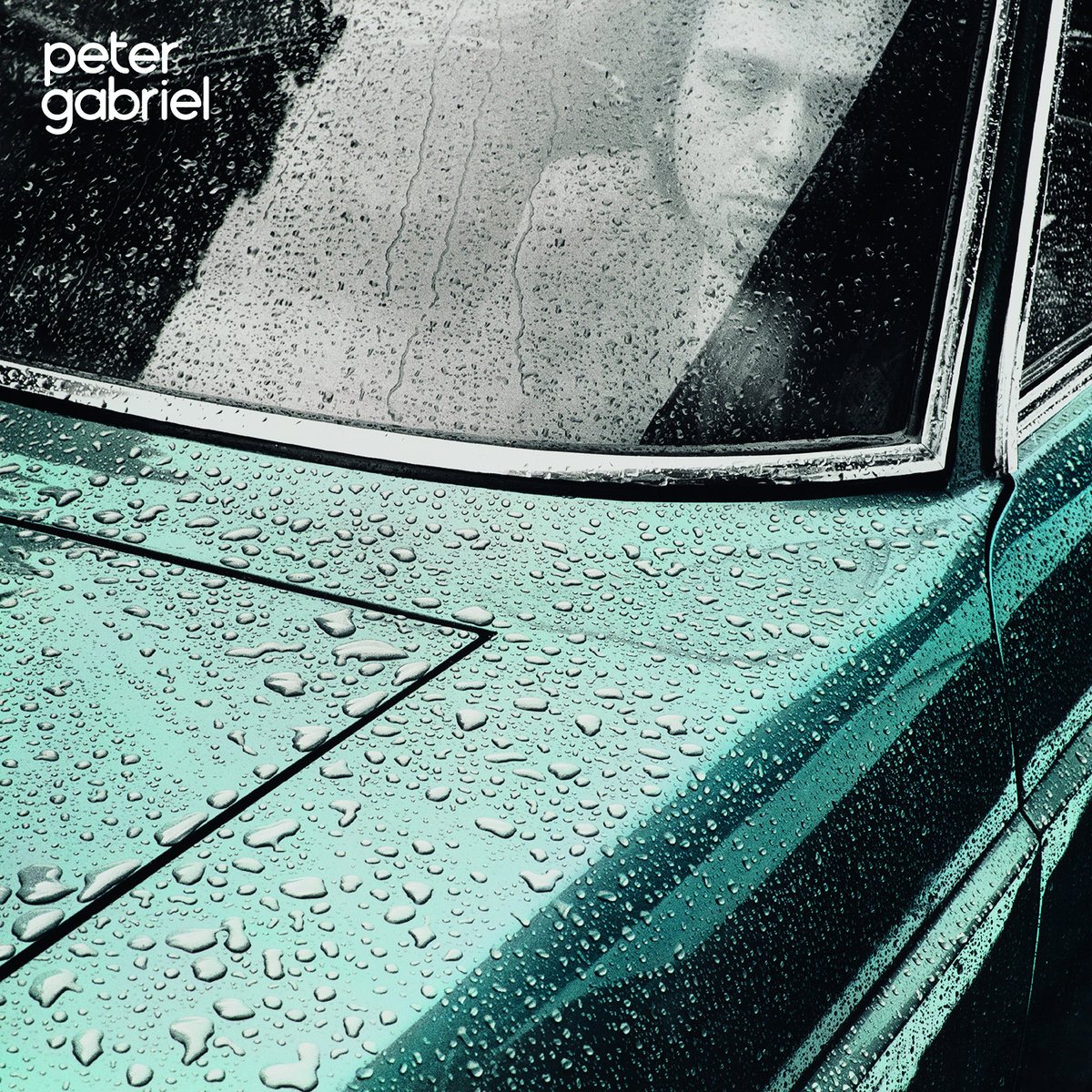
Peter Gabriel spent his last years in Genesis performing behind a fox's head, a giant flower on his head, and a bloated, pustule-covered 'Slipperman' suit that turned him into something closer to a special effect than a singer. A year after he walked away from all of it, in February 1977, his solo debut arrived with no title at all, just his name, and fans needed a shorthand. They took one from the cover: a soaked black-and-white photograph, by Hipgnosis, of Gabriel behind the wheel of a 1974 Lancia. The record became Car.
He'd left Genesis in the summer of 1975, worn out by five years of increasingly elaborate stage narration and unwilling to keep explaining The Lamb Lies Down on Broadway to audiences a song at a time. Bob Ezrin, fresh off records with Alice Cooper and Lou Reed, produced the follow-up at a studio in Toronto that autumn, with sessions finished at Morgan and Olympic in London. Robert Fripp played guitar. Tony Levin played bass. Larry Fast brought the synthesisers that would define most of what Gabriel did next.
'Solsbury Hill' is the reason anyone still hears this record on the radio.
Gabriel wrote it about the hill above Bath where, he's said, he found the clarity to quit his old band, and he set the whole thing in 7/4 so the chorus lands slightly wrong-footed every time it arrives, a rhythm that refuses to sit down the way straight 4/4 would let it. Ezrin wanted a twelve-string on the main guitar part; a plain six-string Martin got the job instead. The closing line, 'grab your things, I've come to take you home,' wasn't settled until the final day of mixing. The single reached number thirteen in the UK, a modest hit that has outlasted several much bigger ones.
The rest of the record refuses to sit still around it. 'Moribund the Burgermeister' opens the album on a stomping, faintly cabaret turn; 'Modern Love' is close to pub rock; 'Here Comes the Flood' closes it on a hymn Gabriel has since called overproduced, synthesiser wash where a bare piano might have done more work.
None of it quite explains itself, and that's the point. Genesis gave Gabriel elaborate stories to hide behind; Car strips the costumes off and keeps the theatre anyway, relocated into the arrangements themselves. It reached number seven in Britain, a strange record to sell that well, and it argues plainly that a frontman doesn't need a mask to still be performing.