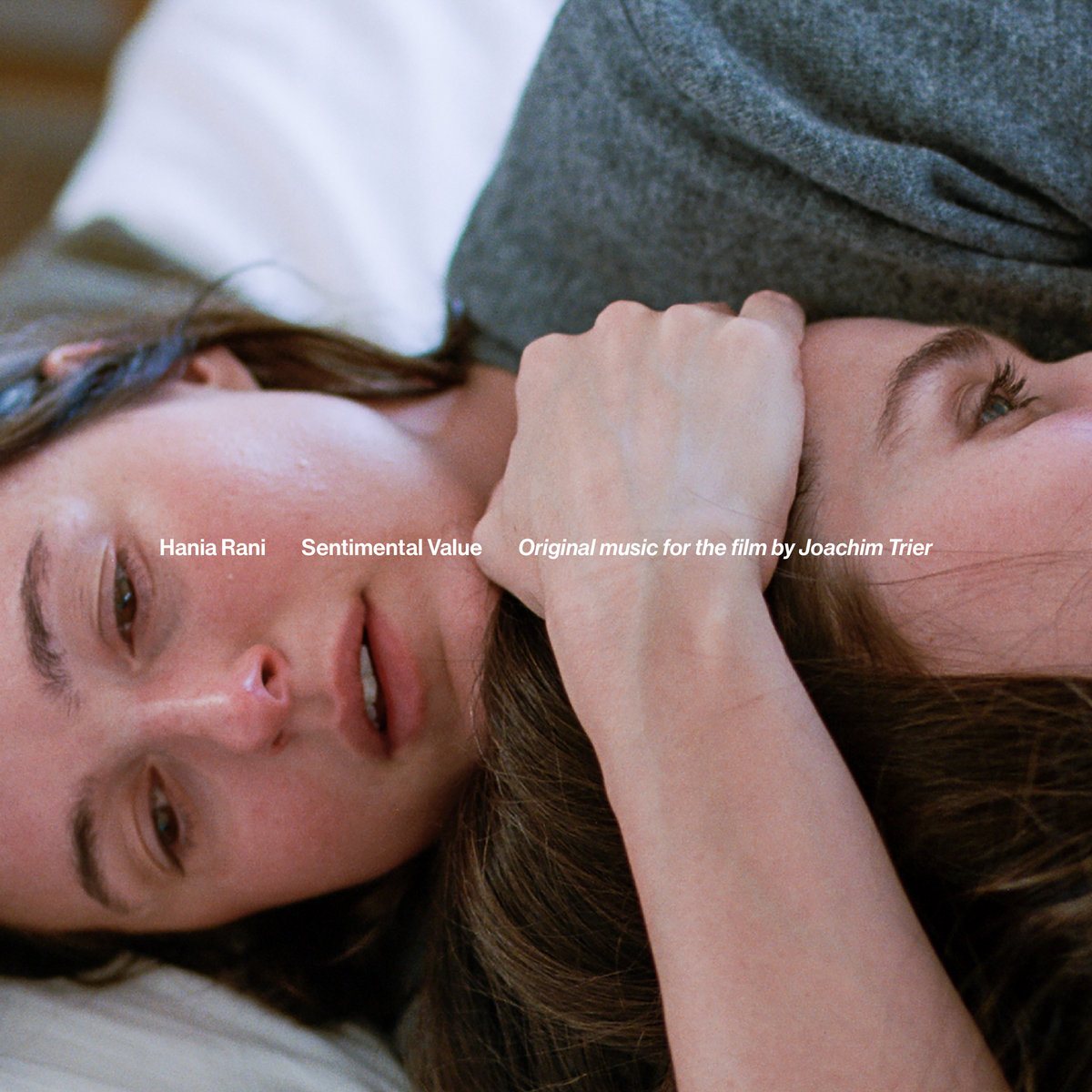
Hania Rani wrote most of the score for Sentimental Value before she had seen a single edited frame of the film.
Joachim Trier gave her the script and little else. So in September 2024 she flew to Oslo with the sound engineer Agata Dankowska and spent several days inside the house where the story is set, recording its floorboards, its furniture, its particular quiet, and photographing rooms she would later need to imagine in sound. It is a method she has used before, on smaller films, but never with this much space to work in.
The record that resulted runs to ten tracks and thirty-eight minutes, several of them named for the characters who move through the house: Agnes, Rachel, Gustav, Nora. The longest, Gustav, stretches close to seven minutes and barely raises its voice.
That restraint is the point.
Rani has said she resists writing music that simply serves a scene, treating it instead as a counterpoint running alongside the image rather than underneath it. On Sentimental Value that means solo piano passages, spare and unmistakably hers, standing next to fuller chamber and orchestral writing without either dominating; it is, on the evidence of the record, the most fully classical thing she has released, and also the least showy.
Born in Gdańsk in 1990, she trained for exactly this kind of writing, at the Fryderyk Chopin University of Music in Warsaw and later at the Hochschule für Musik Hanns Eisler in Berlin, before jazz pulled at her classical technique and pushed her, on albums such as Esja and Home, towards the melodic, unhurried piano style that made her a fixture of the Gondwana Records roster. Ghosts and Nostalgia followed, along with a piano concerto, Non Fiction, and a long-running duo with the cellist Dobrawa Czocher.
Film work has become a parallel career of its own; Never Gonna Snow Again and I Never Cry both carry her music, as do Rosalie and The Summer Book. Sentimental Value is simply the biggest stage she has had.
Rani has already collected seven Fryderyk Awards, Poland's principal music prize, and the Paszport Polityki in 2023. The film itself won the Grand Prix at Cannes last May, and in January the European Film Awards gave her its own prize, for best composer.
The vinyl edition of the score reached shops on the 22nd of this month. Heard on its own, away from the film, it holds up as something closer to a suite than a soundtrack, proof that Rani's instinct, to record a house before she writes a note about the people living in it, was the right one.