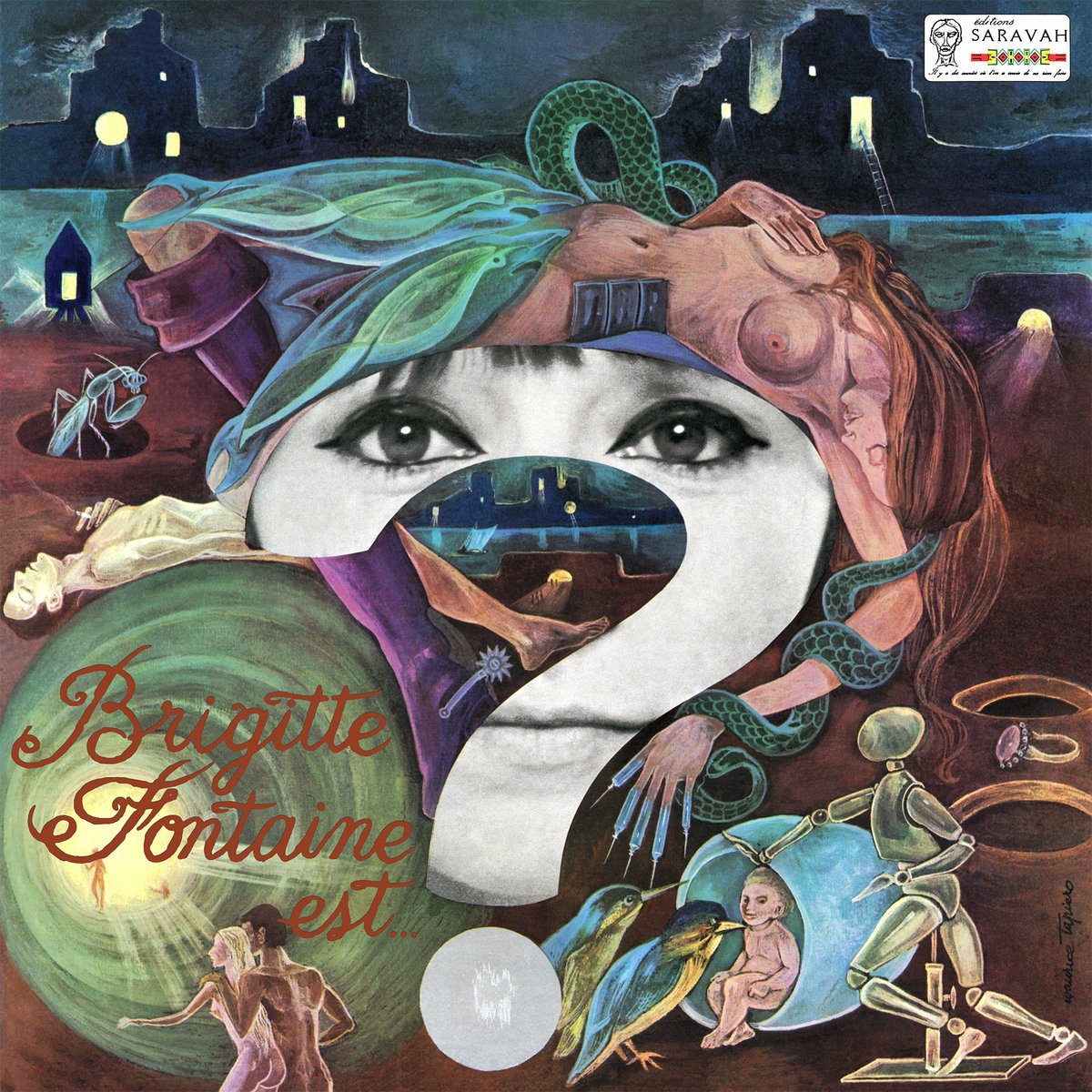
Three years before Jean-Claude Vannier wrote the string charts for Serge Gainsbourg's Histoire de Melody Nelson, he was doing something stranger, and far less credited, for Brigitte Fontaine.
Est... Folle came out on Pierre Barouh's Saravah label in 1968, recorded at Studio Davout with Vannier handling the orchestration. Fontaine, then twenty-nine and already a working actress and theatre writer, considered it her real debut, even though a couple of records already carried her name. The songs, several co-written with Olivier Bloch-Lainé, Alain Clavier and her old collaborator Jacques Higelin, sound at first like children's melodies: harp figures, woodwind, string lines that curl rather than swell.
Then the lyrics arrive.
"Le Beau Cancer" sets a terminal diagnosis to something close to a lullaby. "Je suis inadaptée" turns misfit status into a boast delivered with a shrug. Fontaine doesn't sing so much as narrate, half-spoken, refusing rhyme where rhyme is expected, and the gap between Vannier's confectionery and her flat, unimpressed delivery is where the record does its actual work. It's chanson that has stopped trusting the form's own prettiness.
Fontaine had come to music sideways, via provincial Finistère and a teenage move to Paris to act, and she treated pop the way she'd treated the stage: as material to be undermined from within. The year after this album, she began working with the Algerian percussionist Areski Belkacem, first as collaborator and then as lifelong partner, and the records that followed with him got looser and more percussive, culminating in 1970's Comme à la radio, cut with the Art Ensemble of Chicago, which pulled her further from chanson than Est... Folle ever ventured. That record gets called her masterpiece more often. This one is the hinge.
WEWANTSOUNDS' new edition remasters the album from the original tapes and adds the material around it: Fontaine and Bloch-Lainé's 1967 demos, seven of Vannier's backing tracks stripped to instrumentals, and an acoustic radio version of the opening track cut for ORTF. The booklet carries an essay from the journalist Jeremy Allen alongside a short reflection from Stereolab's Lætitia Sadier, which tells you plainly enough which later scene picked this record up and carried it forward.
Heard now, Est... Folle plays less like a curiosity than a diagnosis: a French pop record figuring out, in real time, that prettiness and dread aren't opposites so much as neighbours.