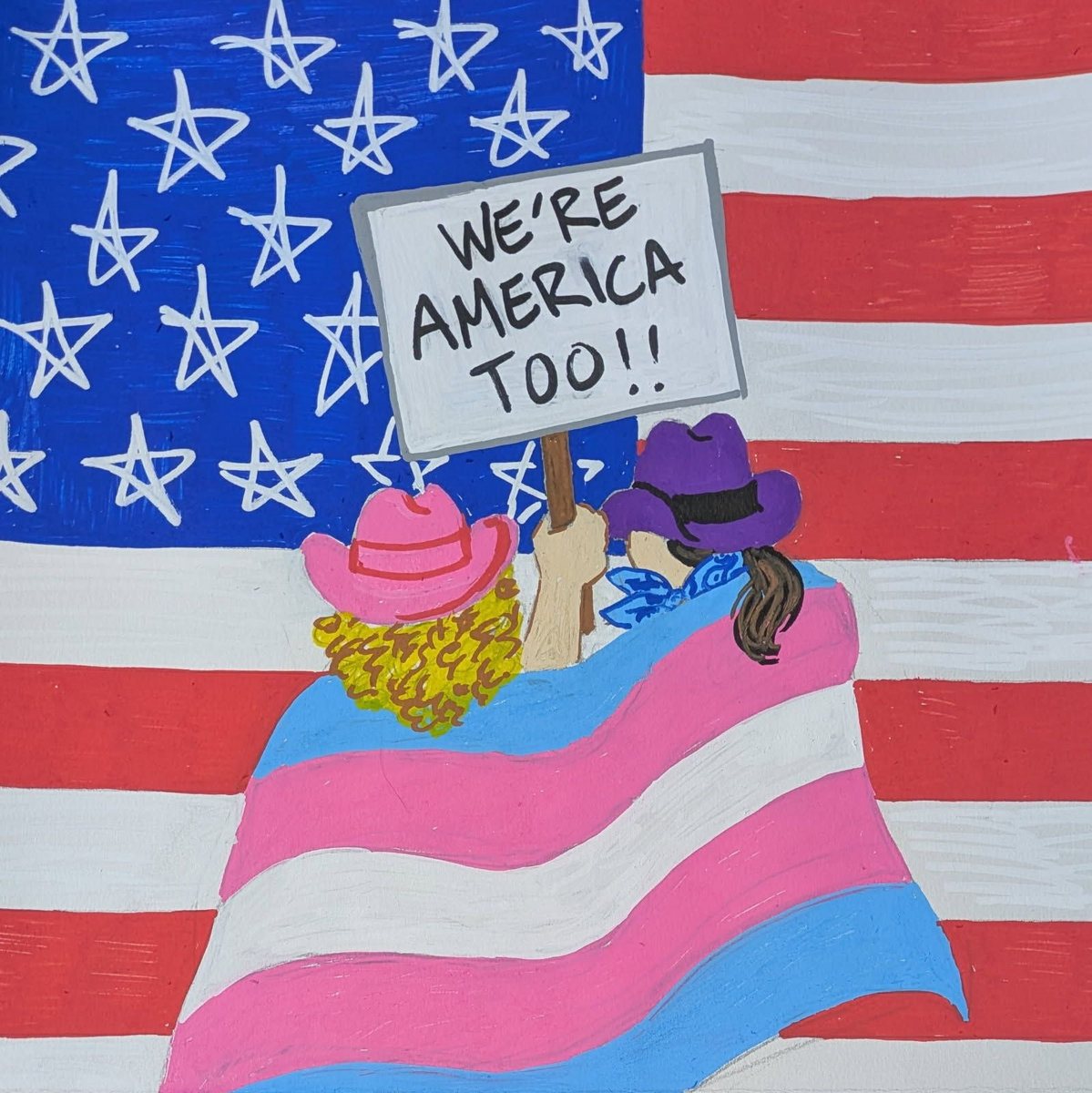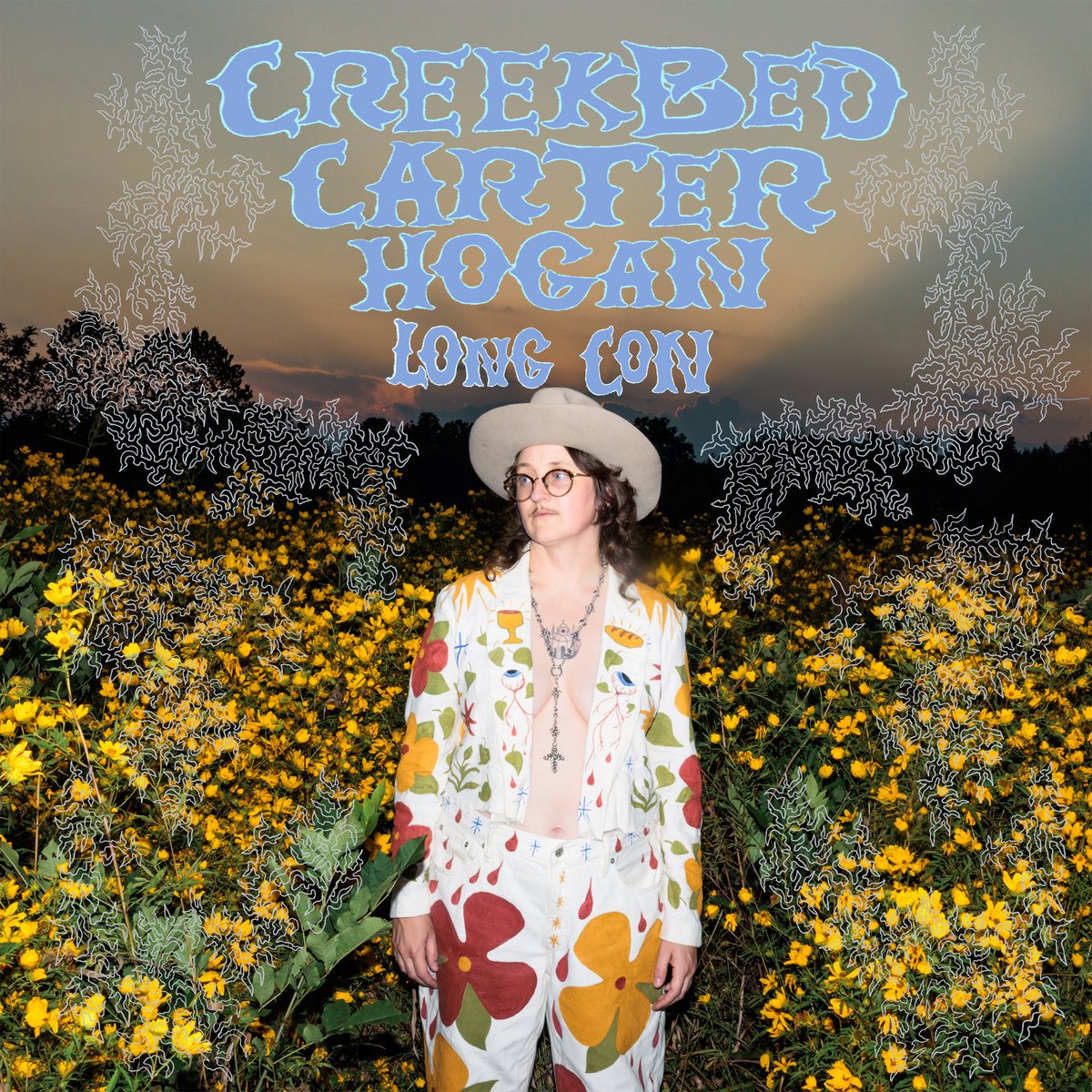
The trick of Long Con is that its narrator is not the hero. Creekbed Carter Hogan writes the song from the position of someone who has wanted a friend for too long, has crossed a line or two in the past, and has now resolved, out loud and in front of a shuffling dance floor, to keep their hands to themselves. It is a stranger subject than most love songs manage, and Hogan dresses it in the least self-serious clothes available: a mouth trumpet solo in the Roger Miller manner, an upright bass that walks with a slight limp, and Britton Beisenherz on piano playing the sort of rolling barroom figures Mary Chapin Carpenter used to build hits around. Hogan calls it a t4t honky-tonk love song about the queer tradition of falling for friends, and the wryness is the point.
The single arrived on Gar Hole Records in April 2026, cut at Ramble Creek in Austin with Lindsey Verrill on bass and mastered by Sarah Register, and it sits between two very different records. Two years earlier the self-titled album, Hogan's first with a band and a label, introduced them as a fingerpicking writer with a lapsed-Catholic imagination, full of pedal steel, fiddle and songs like Lord, Make Me a Scorpion. Three months after Long Con came Peasants Revolt, a ten-song album Hogan co-produced with Beisenherz that swaps the confessional for the carnivalesque. The Last Supper opens it, Hot Dog! Apocalypse and After the Wurst of It close it, and in between Hogan splices fourteenth-century regicide ballads to Appalachian strike songs and Ethiopian jazz, with Nora Predey, Sarah Schultz, Beth Chrisman and Zack Wiggs in a band that can turn a folk song into a bonfire mid-verse.
What holds the catalogue together is the lineage Hogan claims and the one they were handed. The first record, good st riddance, was recorded alone in Ozark valleys in 2020, sung to birds and passing trucks, dedicated to St. Wilgefortis, the bearded saint claimed by trans people and abuse survivors. A 2023 split with Large Brush Collection folded crowd noise from a trans-rights flash mob in Fayetteville into a banjo hymn called Pilgrim. Gar Hole itself is a Fayetteville label, home to Nick Shoulders and Jude Brothers, where country music tends to wear its politics on the sleeve. Hogan, now based in the Twin Cities after a route that ran from Arkansas through Austin to Saint Paul, fits that lineage while sounding like nobody else on it, closer in spirit to Hazel Dickens and John Prine than to the Nashville revivalists.
Long Con is the small song in that story, and its smallness is what makes it land. A month before it, Hogan released a bare reading of Mary Gauthier's Slip of the Tongue, another song about saying too much. Put the two together and you get the whole ethic: a singer who treats restraint as a kind of tenderness, and who knows that the funniest way to tell the truth is usually the kindest.