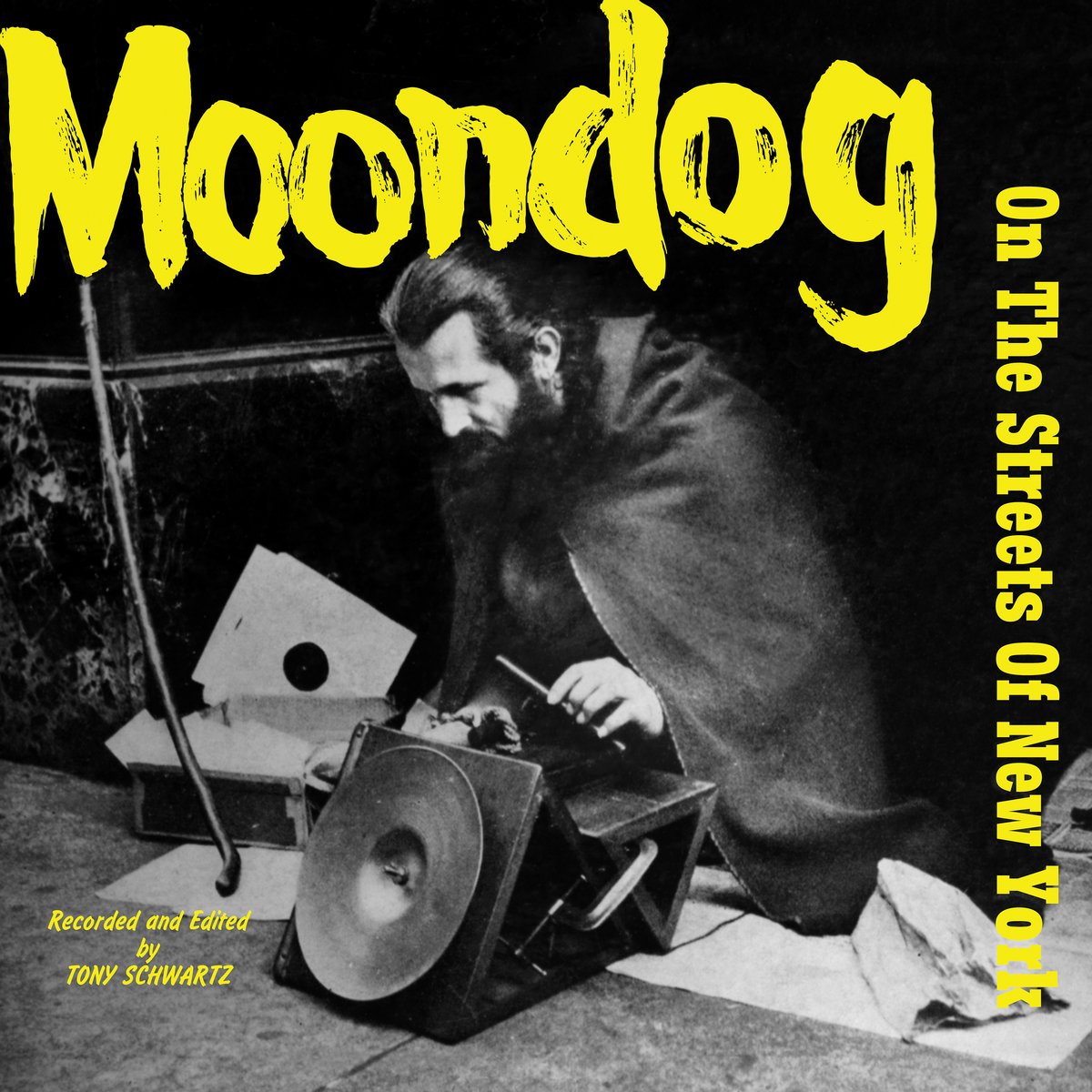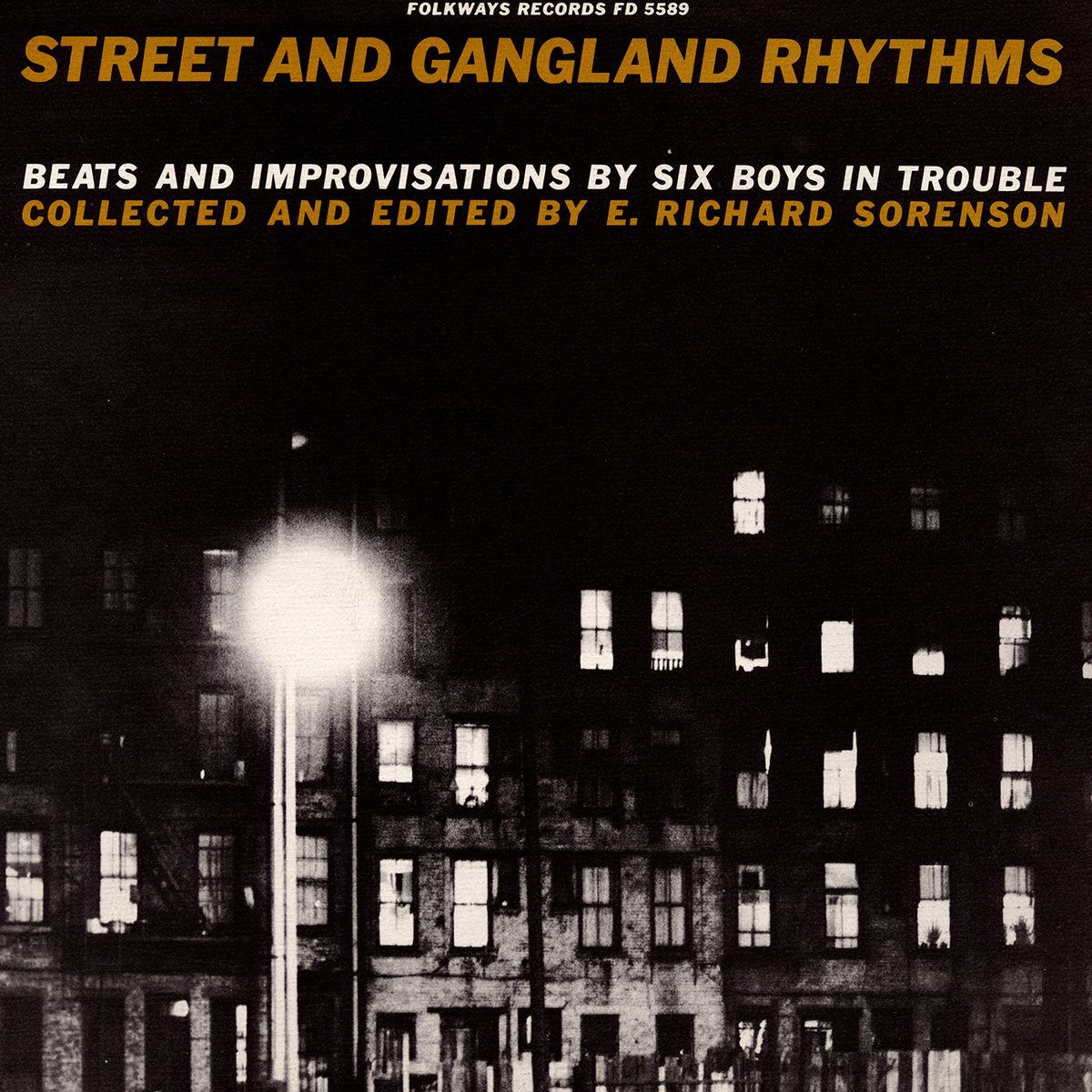
The title promises the street. What the sleeve of Folkways FD 5589 admits in smaller type is that none of it was taped on a corner. The six boys, eleven and twelve years old, Black kids from Harlem tenements and city housing projects, were recorded in the residential training school where the juvenile court had sent them. The streets on this record are not a location. They are a memory being performed by children who have just been removed from them, and that distance is what turns an hour of bongos and shouting into a document.
The collector and editor was E. Richard Sorenson, who in 1975 became founding director of the Smithsonian's National Anthropological Film Center, built on the idea that unstaged footage of ordinary behaviour is evidence. In 1959 he was already working that way with a tape recorder. Nobody had taught these boys an instrument. They played bongos, sticks, maracas, bells, coke bottles, coins clicked together out of a pocket. One boy led by glances and nods, set a pattern, then took his cues from everyone else. No two takes came out alike, and Sorenson transcribed the words afterwards because nothing had been written down.
The first side moves from pure percussion through nonsense chant to rhymes from a much older tradition. 'Bo Diddlie' is the hambone verse, the police arresting the man behind the tree, the wife in the kitchen with a fork and knife, driven by drumming that owes as much to Puerto Rican and West Indian neighbours as to the radio. 'Gugamuga' invokes a figure who is half bogeyman and half protector, and by 'Riding Hood Boogy Man' a fairy tale and a cop chase have fused into one story.
Side two is where the record stops being charming. 'Gang Fight' is a radio play made up on the spot: the Alligator Lords against the Vikings on Franklin Avenue, five homemade guns, an announcer voice cutting in to read the casualties, then a chanted anthem insisting the gang never loses. 'Shoe Shine' starts as a plan to raise money for the Braddock pool and ends with a customer calling a child a hoodlum. 'I Want Some Food', at five minutes the longest track, is a complaint about institutional meals, which is to say it is about where the boys actually are.
Folkways, founded in 1948 by Moses Asch and Marian Distler, issued this, and when the Smithsonian took the catalogue after Asch's death in 1986 it promised that all 2,168 titles would stay available. Smithsonian Folkways reissued this one in 2004. That promise is the only reason a record by six unnamed boys in a reform school, its cover credited to Stephen Dwoskin, is still for sale. It is also a reminder that the label's real subject was never folk music, but whoever happened to be in the room.