Yoon Jeong Heo plays an instrument that was designed for restraint. The geomungo, a six-string zither struck with a short bamboo stick called a suldae, belongs to Korean court and scholar traditions that valued a note held with dignity, not bent or pushed. Heo spends most of Black String's records doing exactly what the instrument was built to resist.
She formed the quartet in 2011 with daegeum and yanggeum player Aram Lee, guitarist and electronics player Jean Oh, and Min Wang Hwang on janggu drum and vocals, describing the resulting sound as 'borderless contemporary Korean music' rather than committing to any single genre tag. The name is itself a translation: geomungo means, roughly, black string.
Their 2016 debut, Mask Dance, took its title from cheoyongmu, the centuries-old exorcism dance recognised by UNESCO as an Intangible Cultural Heritage in 2009, and won the Asia & Pacific prize at the 2018 Songlines Music Awards.
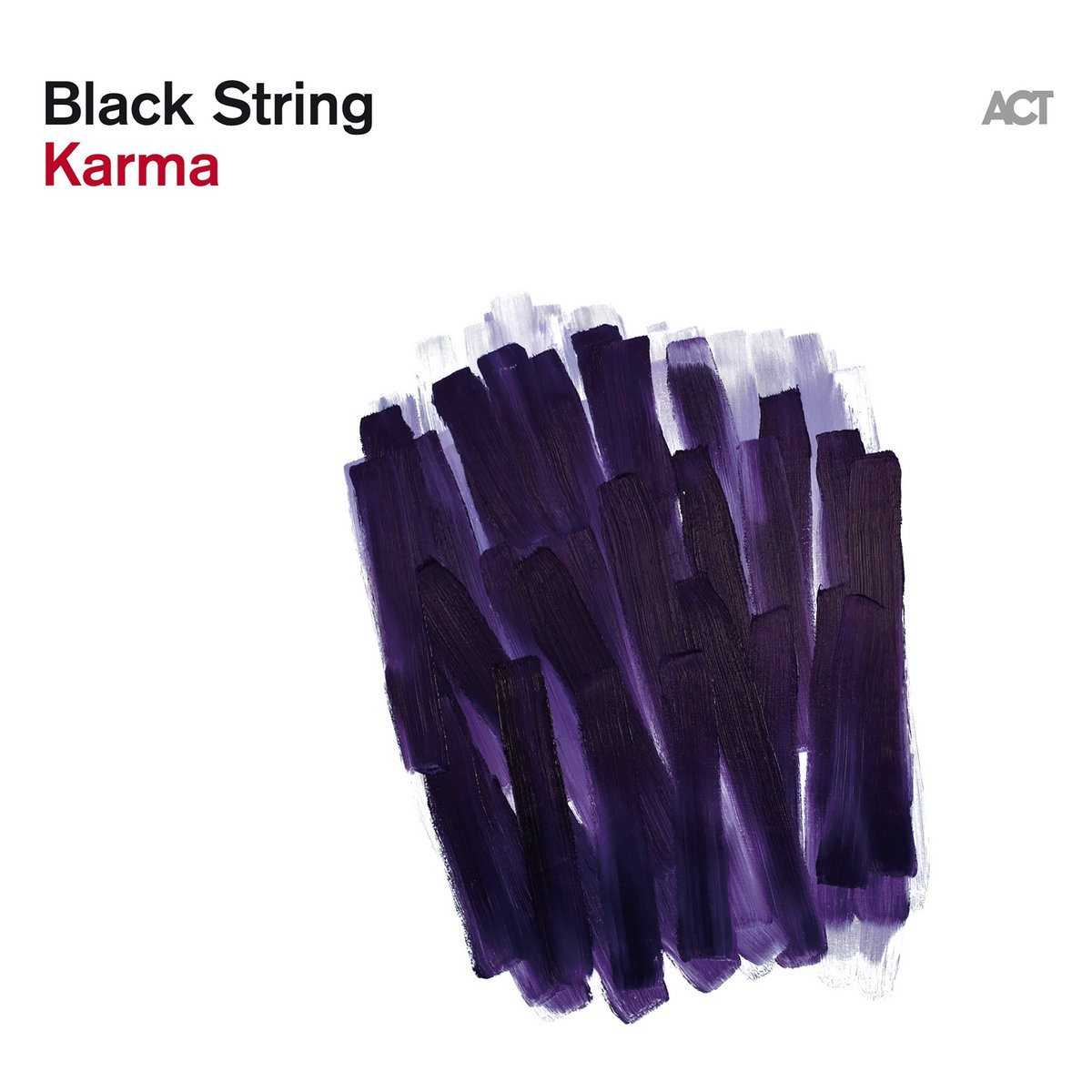
Karma, the follow-up released on the German label ACT Music, pushes further from folk-revival territory into something closer to free improvisation. 'Hanging Gardens of Babylon' is the clearest evidence of how far the quartet's reference points now stretch beyond Korea: taepyeongso, the double-reed horn traditionally used to announce royal processions, is set against scorched electric guitar and a syncopated sub-bass line, summoning something closer to a Middle Eastern coronation than anything found in gugak repertoire.
Two tracks, 'Elevation of Light' and 'Song of the Sea', bring in the Vietnamese-French guitarist Nguyen Le, whose own catalogue of blending Vietnamese folk melody with jazz fusion makes him an obvious match for what Black String are attempting from the Korean side of the same problem.
What distinguishes Black String from the broader field of gugak crossover acts is the absence of a safety net. Where some groups treat traditional instruments as texture over a rock or pop chassis, Heo's geomungo carries actual harmonic and rhythmic weight here, improvising alongside Oh's guitar rather than decorating around it. The results owe as much to European free jazz and to Nordic ECM-style restraint as to anything specifically Korean, which is precisely the point: Black String are not interested in representing a tradition so much as proving it can hold its own in a room built for jazz.