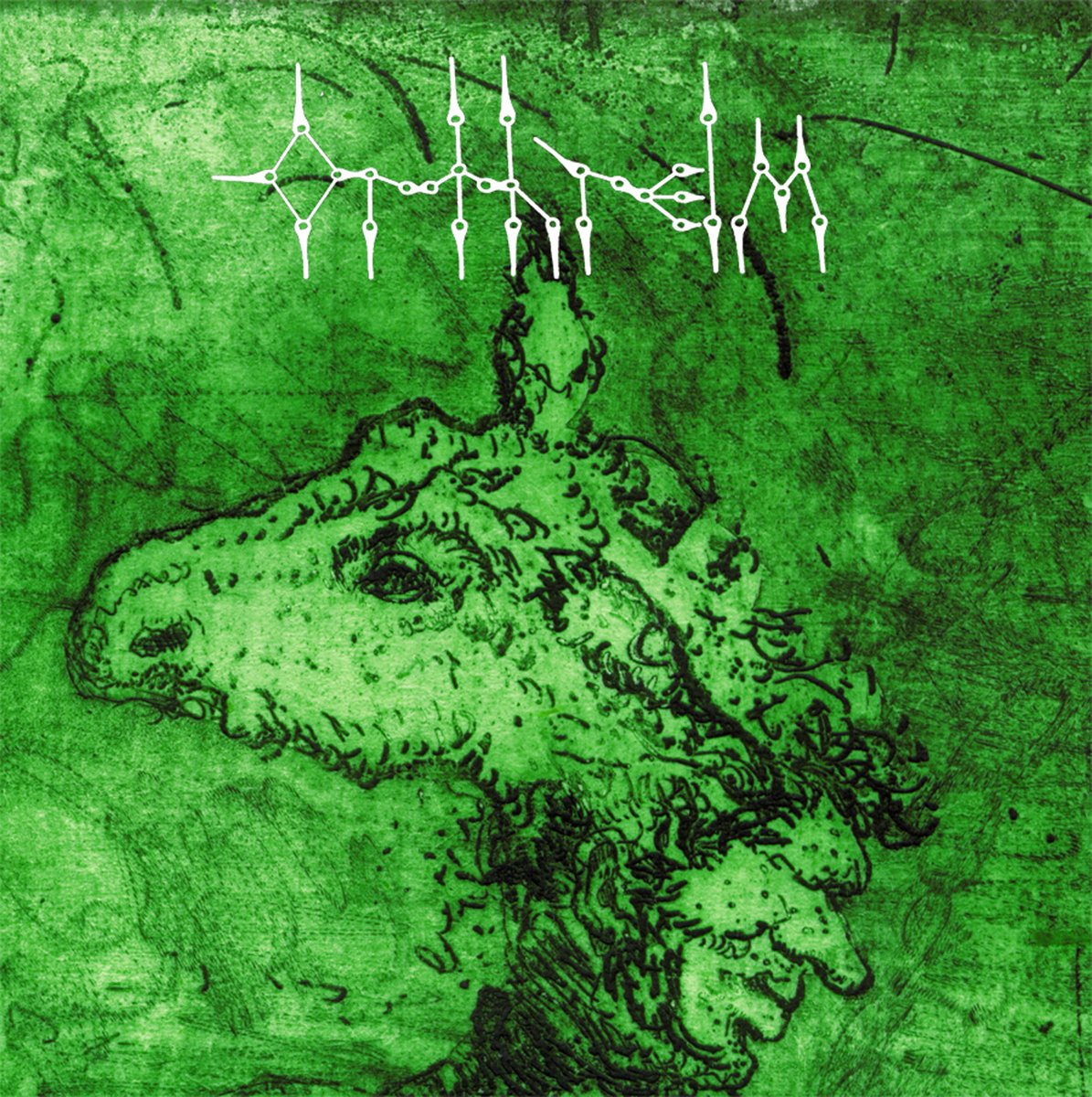
There is almost no shelter inside Ov. Orthrelm strip the setup down to guitar and drums, then refuse the usual relief of verse, chorus or obvious destination. The piece lasts 45 minutes and 43 seconds, but duration is not the point so much as what Mick Barr and Josh Blair do with it: repetition becomes pressure, pressure becomes texture, and texture starts to alter the listener’s sense of time.
Ipecac Recordings released Ov in 2005 as a single continuous track. The format matters. This is not a collection of miniature technical exercises stitched together for effect. Its insistence is structural. Barr’s guitar works in tightly repeated figures, often at a speed that makes individual notes blur into a hard, metallic surface, while Blair’s drumming gives the repetition a second grid rather than simply marking time beneath it.
The result sits somewhere between extreme metal, minimalism and experimental composition without settling comfortably into any of them. Metal supplies the attack; minimalism supplies the logic of accumulation. What makes Ov stranger is the way virtuosity is made to sound impersonal. Barr is an obviously exacting guitarist, yet the record rarely behaves like a showcase. Technique is useful here only because it allows the pattern to continue long enough to change character.
Barr’s wider work follows the same appetite for difficult structures. His projects include Crom-Tech, Octis and Ocrilim, and he has also played with the Flying Luttenbachers. In Krallice, alongside Colin Marston, Lev Weinstein and Nicholas McMaster, he channels a different kind of density. Across those projects, the common thread is less genre than method: intricate material pushed until it stops feeling decorative and becomes environmental.
Ov may be the clearest expression of that instinct.
The record also resists the mythology often attached to difficult music. Its challenge is plain rather than obscure. There are two players. There is one piece. The vocabulary is established early. What changes is the listener’s relationship to it. Small shifts begin to feel enormous because the frame is so strict; endurance becomes a compositional tool because nothing arrives to reset the ear.
More than two decades after its release, Ov still feels severe without sounding dated. Its extremity does not depend on production tricks or fashionable abrasion. It comes from concentration: two musicians holding a narrow idea in place until repetition stops reading as repetition and becomes a physical condition.