Brian Eno does not hand out compliments to be polite. "Leenalchi has changed the way I think about music, dancing and Korea," he has said. "I have never heard anything quite like this." He is right to be thrown: the seven musicians in Leenalchi build songs out of a seventeenth-century Korean storytelling form and two basslines, and somehow the combination sounds less like a novelty than like the future arriving from an unexpected direction.
The band takes its name from Lee Nal-chi, a pansori singer and tightrope walker active in Korea in the 1880s, which tells you most of what you need to know about their sense of humour. Formed in Seoul in 2019, the group pairs four classically trained pansori vocalists, Ahn Yi Ho, Choi Su In, Park Soo Bum and Ra Seo Jin, with two bassists, Ejae and Jang Young-gyu, and drummer Oh Hyung Suk, a lineup with no guitar and, on record, barely any need for one. They spent their first years on the independent label ZANPAR before signing to Luaka Bop, the New York label David Byrne founded in 1988, in 2026.
Their breakthrough came from an unlikely place: a tourism advert.
"Tiger is Coming," a retelling drawn from the pansori epic Sugungga, soundtracked the Korea Tourism Organization's Feel the Rhythm of Korea campaign in 2020, and the clip's deadpan dancing hanbok-clad grandfathers turned into one of the country's more improbable viral exports. The song appeared on the band's debut album, also called Sugungga, that same year, produced by bassist Jang Young-gyu, whose other job is scoring films including The Wailing and Train to Busan.
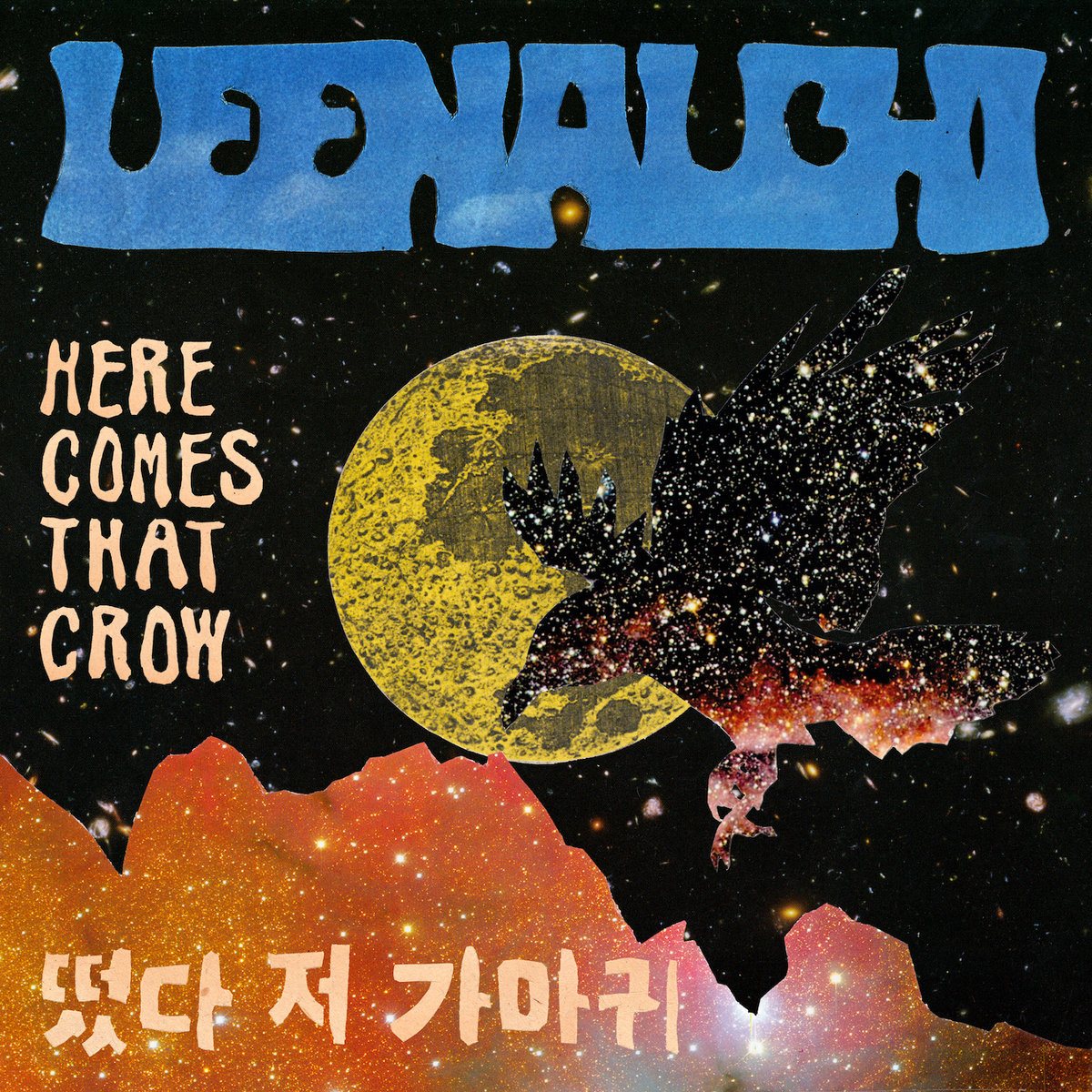
Here Comes That Crow, their first release for the American label Luaka Bop, pushes the same formula somewhere stranger. The narrative comes from an old story about the Chinese warlord Cao Cao, used here as a meditation on how fragile and inevitable a life can be, but the arrangements are pure widescreen pop: the arpeggiated synths running under Let's Live For Today feel simultaneously vintage and futuristic, while the backing vocal hooks on Look At Me Look At Me move with a physical, danceable urgency that owes as much to Stereolab and Sleaford Mods as to any pansori master.
That range is the point. Leenalchi's members describe writing together the way a Wikipedia entry gets written, everyone adding a line, and the results carry the friction of genuinely different tastes rather than one vision imposed on four hundred years of vocal technique. It is why Eno's confusion feels earned rather than performative: nobody has previously had a reason to put jultagi-rope tradition and bass-driven alt-pop in the same sentence, let alone the same song.