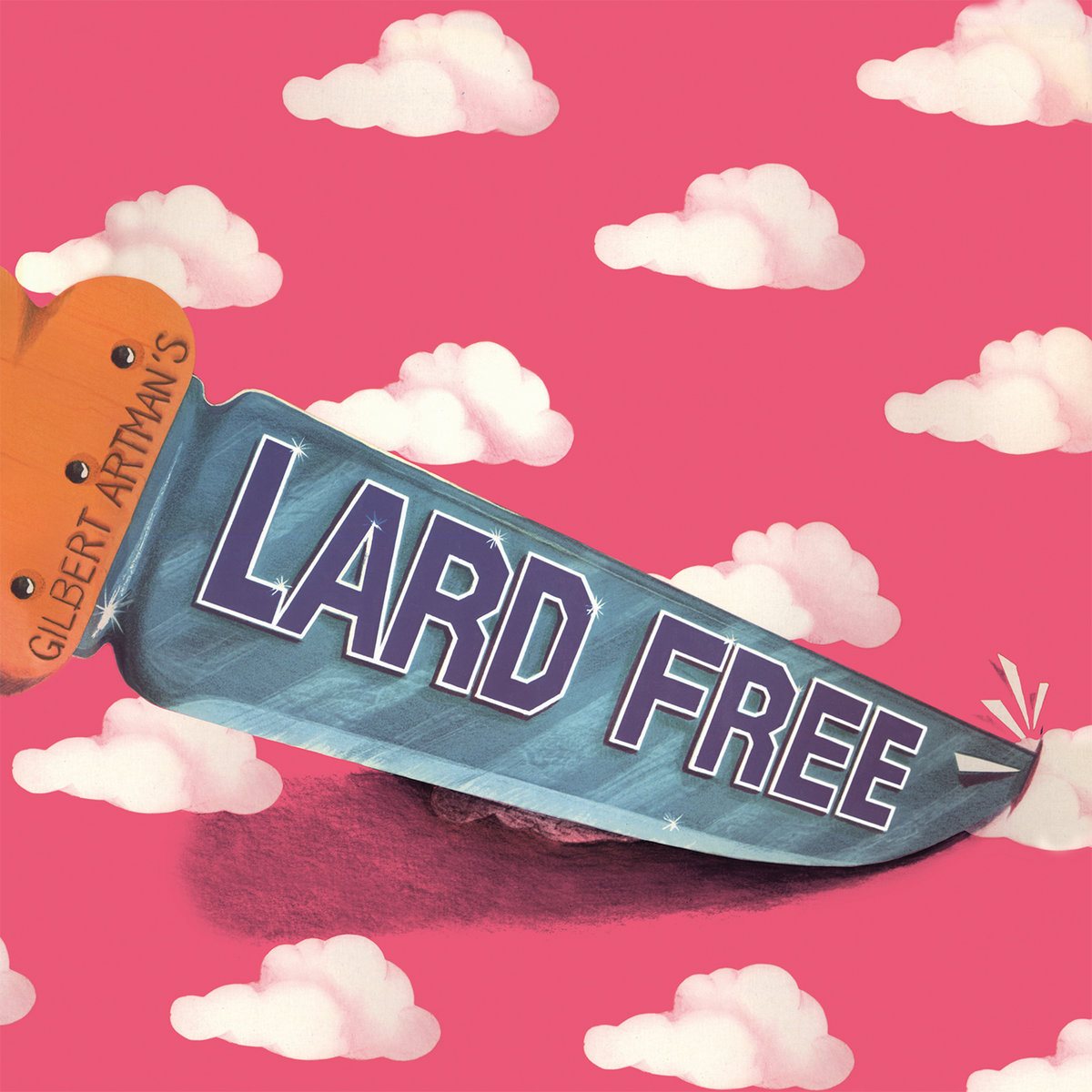
Lard Free’s music does not swing so much as grind its gears in public. On the group’s 1973 debut, rhythm is rarely a comfortable foundation. It is pressure: Gilbert Artman’s drums pushing against François Mativet’s guitar while Philippe Bolliet’s saxophone searches for a gap wide enough to rupture.
The band had begun around Artman at the start of the decade, but Gilbert Artman’s Lard Free catches a specific four-piece configuration. Artman plays drums, Steinway piano and vibraphone; Mativet handles guitar; Bolliet saxophone; Hervé Eyhani bass and ARP synthesizer. Recorded and mixed at Island Studio in April 1973, the album compresses those materials into seven pieces that refuse the clean border between rock composition and improvisation.
Warinobaril establishes the method quickly. Guitar and rhythm section produce a hard, repetitive frame, but the saxophone does not decorate it. Bolliet sounds like a disruptive force inside the machinery. That tension carries into the two-part 12 ou 13 juillet que je sais d’elle, where repetition becomes less a groove than a condition the musicians have to negotiate.
Artman is the key because he does not drum like a leader waiting politely behind soloists. His playing gives Lard Free its physical centre, while his keyboards and vibraphone widen the palette beyond a conventional jazz-rock quartet. Eyhani’s ARP is equally important: electronics appear as texture and abrasion rather than futuristic ornament.
The result sits awkwardly, productively, between scenes. There is free jazz in the musicians’ willingness to let timbre and collision carry an argument, progressive rock in the structural ambition, and a severe repetitive instinct that can make the record feel closer to a machine loop than a jam. Acide framboise and the nearly eight-minute Livarot respiration show how effectively Lard Free can sustain that unease without turning it into chaos.
Artman remains the constant through Lard Free’s changing personnel. By 1975’s I’m Around About Midnight, the line-up includes Richard Pinhas on guitar, bass and synthesizer alongside Antoine Duvernet and Alain Audat, pushing the group further into electronic territory. Artman also develops Urban Sax, his large-scale saxophone project built around sound in architectural space.
Those later directions make sense when heard from inside this debut. Gilbert Artman’s Lard Free is already preoccupied with placement: where a pulse sits, how long a repeated figure can hold, what happens when saxophone, guitar and synthesizer occupy the same narrow strip of air.
It is not fusion in the polite sense. Lard Free bring forms together by making them rub against each other until the friction becomes the music.