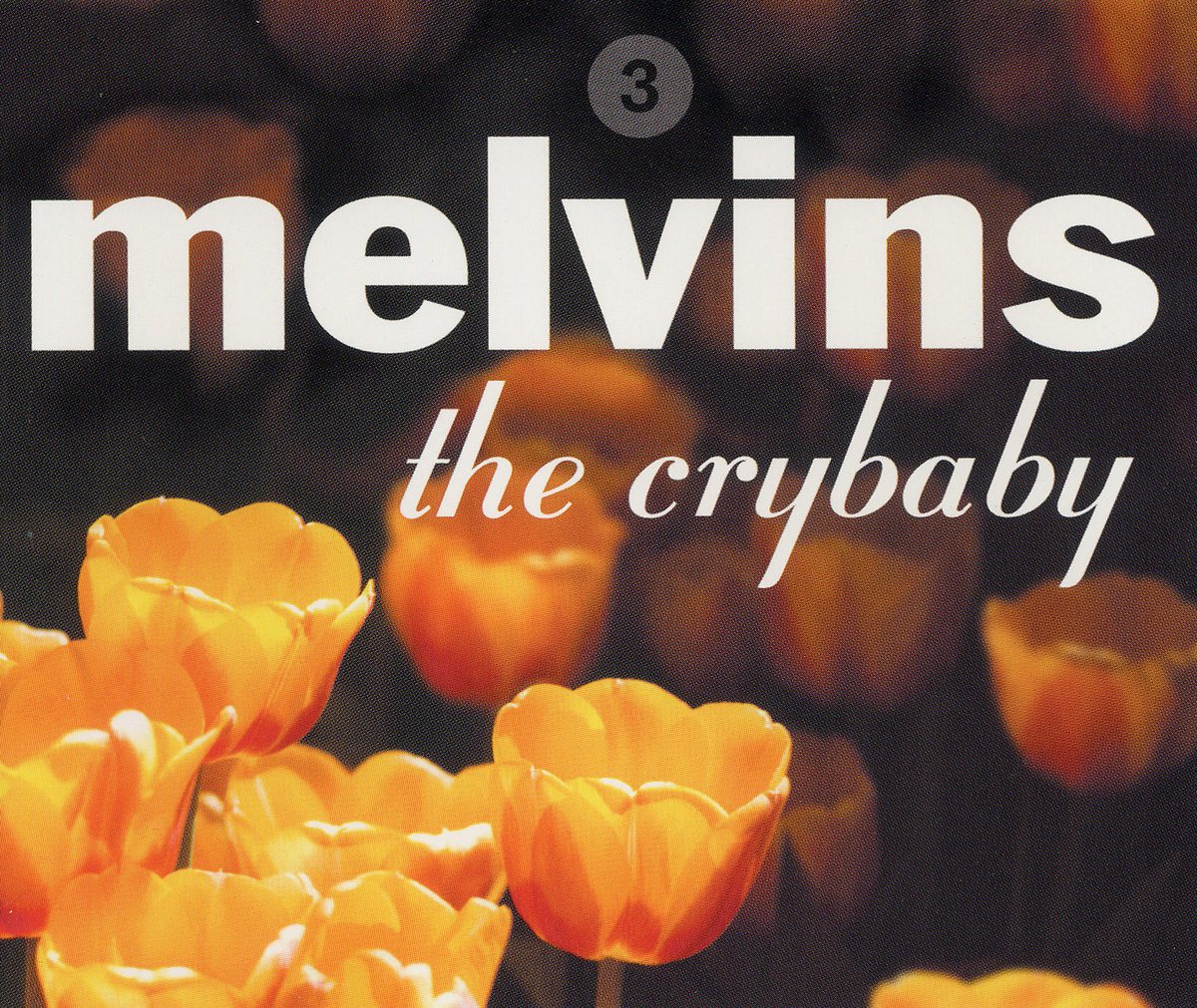
Buzz Osborne thought The Crybaby might finish the Melvins off. That was rather the point.
Released on 7 February 2000, it's the third instalment of a trilogy that began with The Maggot and The Bootlicker the year before, and by any commercial logic it should have been an act of self-sabotage: eleven songs, most built around a different guest vocalist, capped by a note-for-note cover of "Smells Like Teen Spirit" sung by former teen idol Leif Garrett. Instead of ending anything, it became the record that turned Ipecac Recordings, the label Mike Patton and Greg Werckman had founded the year before, from a vehicle for Patton's own projects into what Werckman has called a magnet for weirdos.
The guest list alone tells you how far Osborne let the concept run. David Yow of the Jesus Lizard turns up twice. Hank Williams III sings on two tracks and brings steel guitarist Henry Bogdan with him. J.G. Thirlwell, the man behind Foetus, contributes vocals and samples. Kevin Sharp of Brutal Truth closes the record out with Bliss Blood turning up on Wurlitzer and electric sitar elsewhere. Patton himself shows up on "Mine Is No Disgrace," playing sampler and guitar as well as singing, and Tool are credited as producers on "Divorced," the album's sprawling, nearly fifteen-minute centrepiece.
None of it plays like a novelty record, which is the actual achievement.
Dale Crover's drumming holds the whole thing together underneath the rotating cast, and the sludge-and-sarcasm foundation Osborne built with him after starting the band in Montesano, Washington in 1983 never disappears under the guests. It absorbs them instead, the way it has absorbed noise rock, doom, glam and straight-up covers albums across four decades without settling into any one of them for long. Most bands treat a wall-to-wall guest list as a crutch; the Melvins used theirs to prove the songwriting underneath didn't need one.
Twenty-six years on, that restlessness hasn't slowed. The band released Thunderball under its Melvins 1983 configuration last year, and Osborne, now based in Los Angeles, still treats each record as its own dare. The Crybaby was the dare that worked: rather than closing a chapter, it opened Ipecac's doors to the roster, past and present, that still defines the label today.