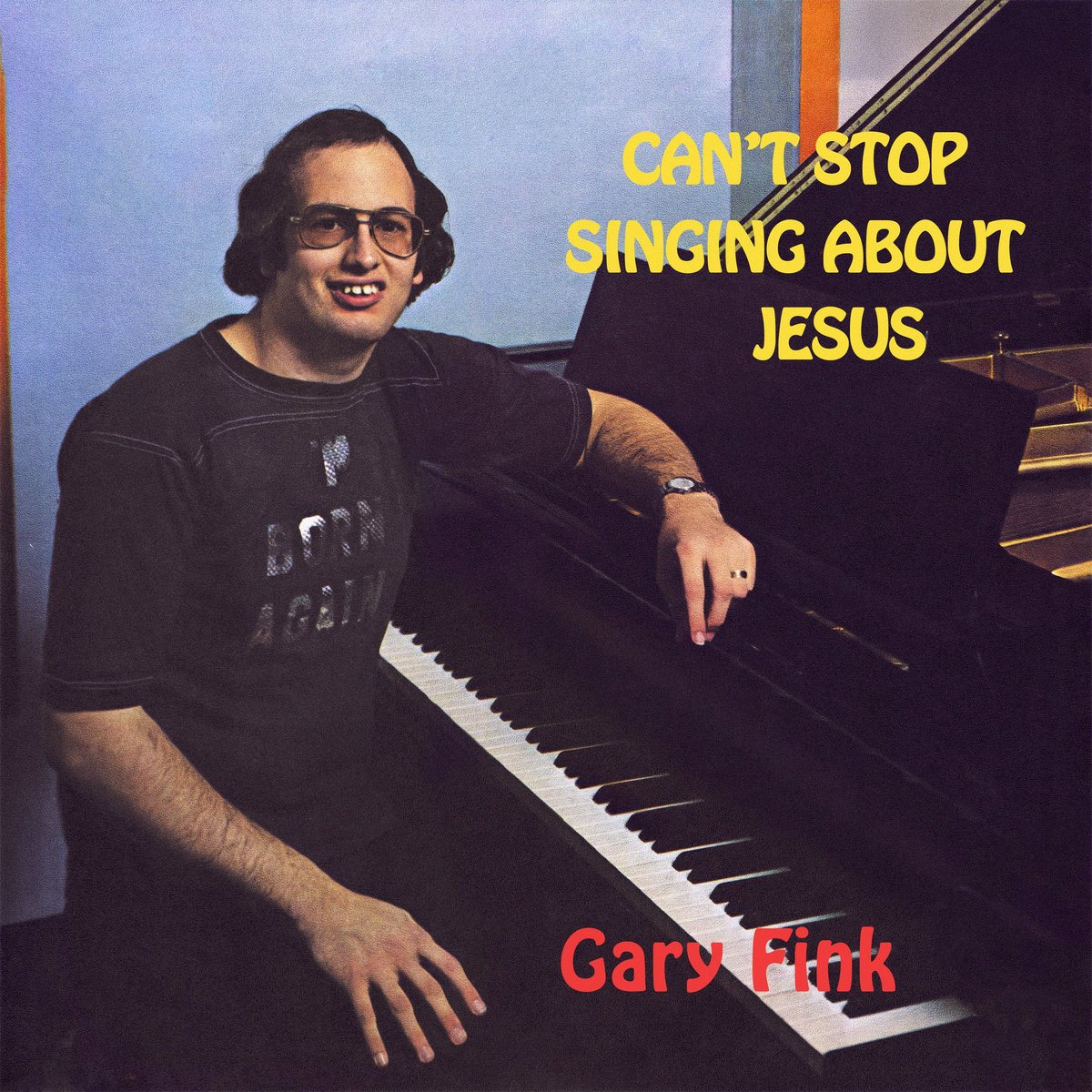
Gary Fink cut his record the way thousands of men in Texas church halls did in the late Seventies: on his own money, with no plan beyond hoping somebody outside the congregation might hear it. He recorded Can't Stop Singing About Jesus in 1977 and pressed it in 1979, a private edition meant to open doors into the Contemporary Christian scene. Then his son was born, and the doors stayed shut. Fink took the jobs a young father takes, kept playing piano at church, and let the touring ambitions go.
He died in 2008, with the record more or less erased from circulation.
It came back by accident. In 2021 someone pulled a copy from a Goodwill bin, posted about it on Reddit, and uploaded the audio to YouTube more as a joke than a tribute — the cover art alone made it easy to laugh at. What people actually heard, once they pressed play, wasn't a joke. The title track is a piano confession about trading rock 'n' roll for Jesus, sung completely straight, with an odd, held pause just before the two-minute mark that nobody wrote a note explaining. It just works.
The joke turned into something else when a second Reddit user tracked down Fink's son, Dion, and learned he needed a life-saving transplant. A fundraiser followed, built entirely out of strangers who'd found a dead stranger's gospel record funny and then couldn't stop playing it.
In November 2025, a reissue producer named Nicholas Martin turned that goodwill into a release. Working with the Fink family, he restored the audio from the surviving masters and put the record out properly on Vibecraft Records as a 45th-anniversary edition — original mixes, a 2025 remix and the untouched LP masters, thirty tracks pulled from ten songs. Martin has said the reissue was run at cost, with proceeds going toward Dion's medical bills rather than into anyone's pocket.
None of that would matter if the songs were merely a good story. They aren't just that. Fink's writing sits closer to the plainspoken piano balladry of early Seventies singer-songwriter records than to the orchestrated Nashville gospel of his moment, and his voice carries the record on sincerity alone, with no studio polish to hide behind. It's a small, unglamorous record that was never supposed to leave Texas. It left anyway, forty-six years late, for reasons that have nothing to do with marketing and everything to do with people simply liking a song.