Before Cradle of Filth had a debut album, they had a lost one. Goetia, recorded in 1992 at Springvale Studios outside Ipswich, was wiped from the master tape after the band fell out with the label they had made it for, Tombstone, which folded soon after. One track, "Spattered in Faeces," survives only because a guitarist had taped it separately to pitch the band to the label. The rest is gone.
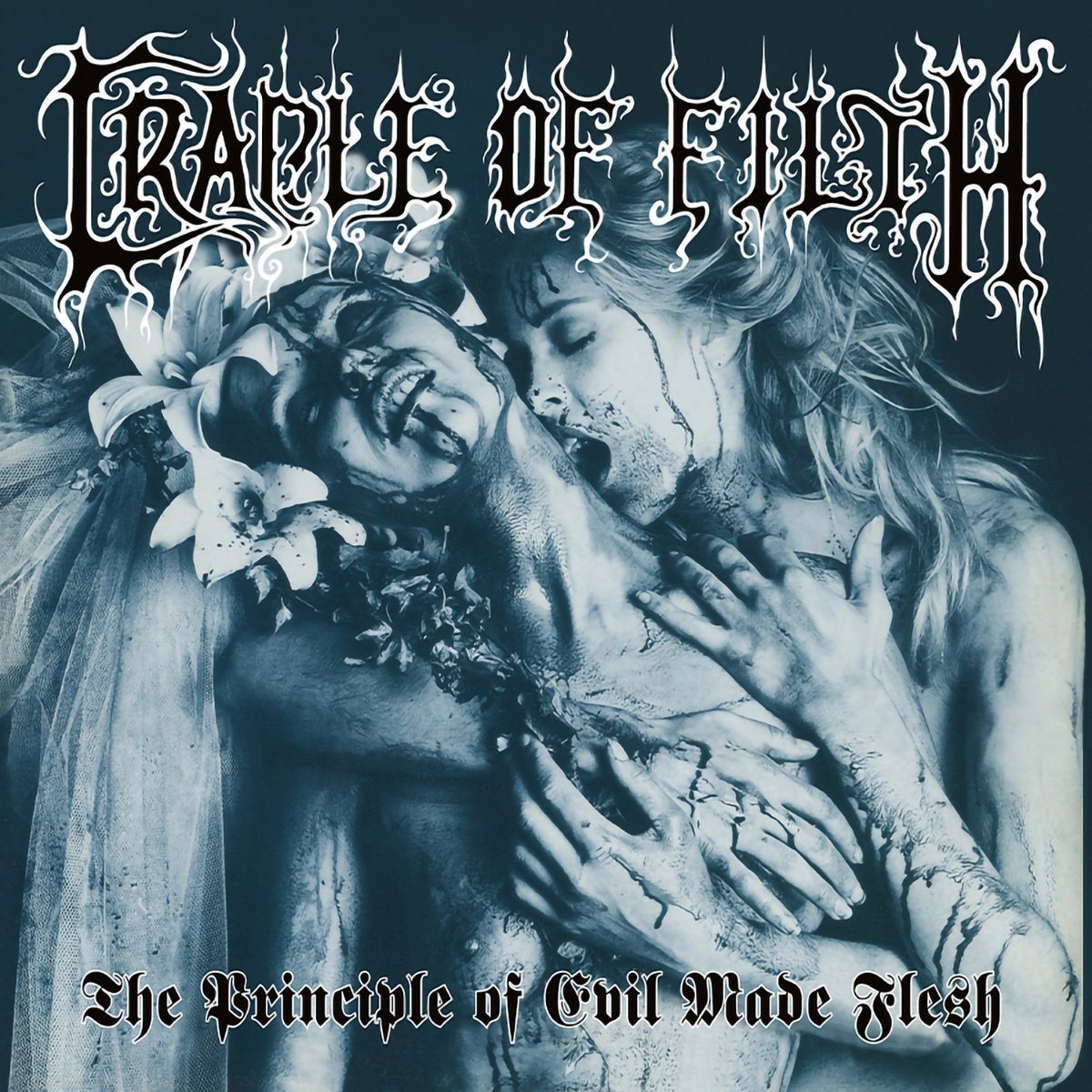
That's the kind of shambolic history Cradle of Filth had behind them before The Principle of Evil Made Flesh. Formed in Suffolk in 1991 around vocalist Dani Filth, the band had already run through three demos and a small army of members by the time they reached a studio in Dewsbury with actual money behind them — a lineup turnover that has never really stopped. Cacophonous Records, then a label with little more than a handful of seven-inch singles to its name, put the album out on 24 February 1994 as its first full-length release, and the record that redefined what the label was for.
What they made there, with producer Robert "Mags" Magoolagan across September and November 1993, didn't sound like the rest of the emerging black metal underground. Where the Norwegian bands were stripping everything down to buzzsaw guitars and blast beats, Cradle of Filth's debut kept the ferocity but dressed it in keyboards, gothic melody and outright theatre. Benjamin Ryan's keys ran alongside Paul Allender and Paul Ryan's guitars, Nick Barker's drumming and Robin Eaglestone's bass, while Andrea Meyer and Anathema's Darren White supplied the operatic and clean vocals that Dani Filth's shriek needed to bounce off.
The lyrics leaned away from the Satanism the corpse paint suggested and towards older, stranger reference points: Hecate, Lilith, Ishtar, Bastet — goddesses rather than devils, evil imagined as feminine and lunar rather than male and infernal. It gave the album a different kind of menace to its Scandinavian contemporaries, closer to a Hammer horror film than a black mass, and it's why Principle now reads as the record that gave vampiric black metal its most flamboyant register: strings and choirs standing in for cheap tape hiss, seduction standing in for cold.
It made the band instantly divisive. Some heard a group bringing musicality and ambition to a genre that had mostly refused both; others heard black metal's rawness being smoothed over for an audience that hadn't earned the genre's respect. Three decades on, Principle is still the Cradle of Filth record purists point to when they want to admit the band once mattered to them — the one where the fangs, the strings and the stage blood still felt like a genuine discovery rather than a costume.