Fille Qui Mousse sound as though someone has cut the connecting tissue out of a rock record. A voice appears, a guitar establishes itself, a piano intrudes, environmental noise changes the scale of the room — then the whole arrangement seems to remember that continuity is optional.
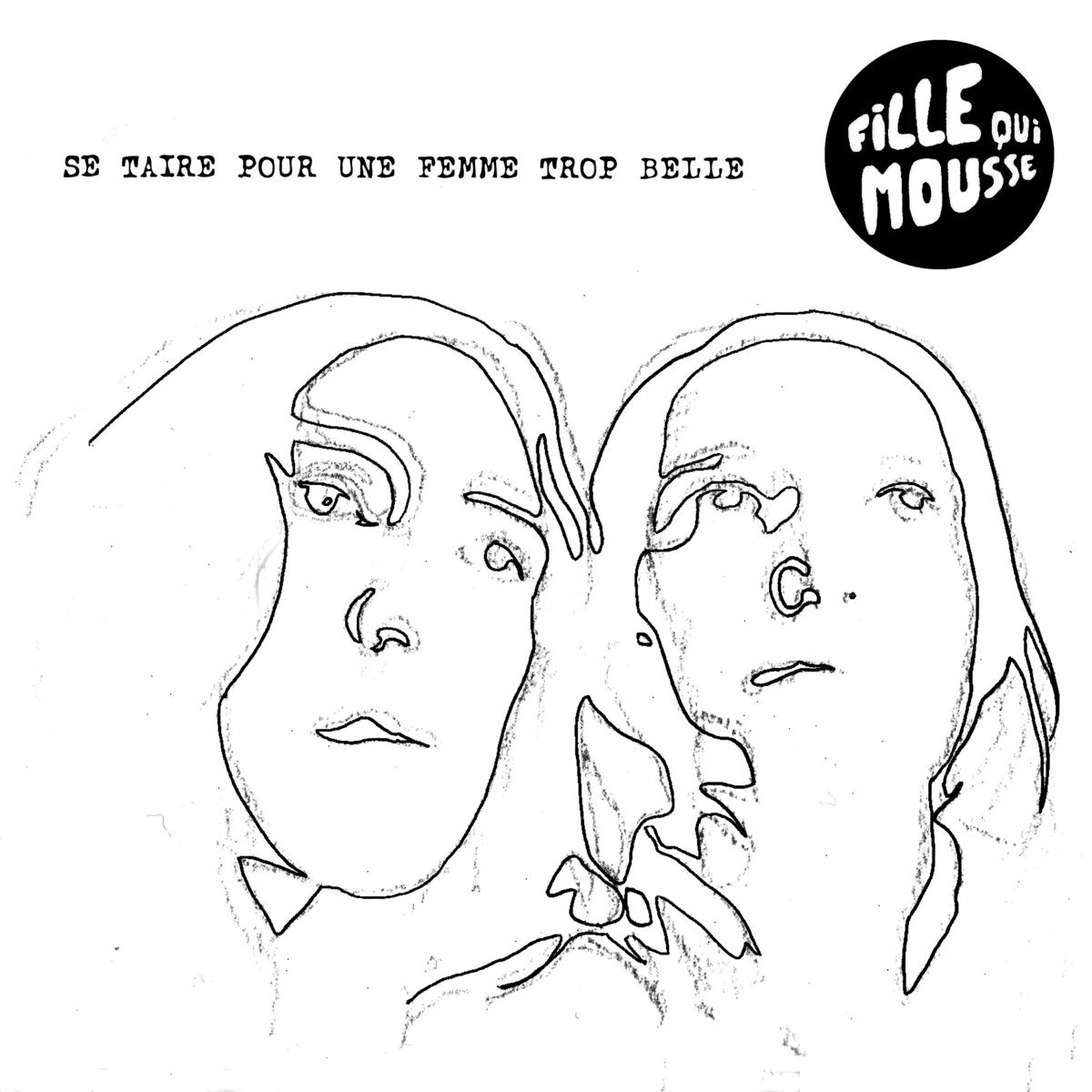
That instability is the point of Se Taire Pour Une Femme Trop Belle, recorded in a single day on 8 July 1971. Fille Qui Mousse was organised around Henri-Jean Enu, an artist, musician and editor of the underground newspaper Parapluie. He led a collective whose shifting membership made fixed rock-band roles feel beside the point.
The documented personnel makes that clear. Barbara Lowengreen supplies vocals; Benjamin Legrand piano and vocals; Sylvie Péristéris sound effects; Denis Gheerbrandt vocals; Daniel Hoffmann guitar; Jean-Pierre Lentin guitar and bass; Dominique Lentin percussion; Léo Sab violin; François Guildon and Bernard Gilson guitar. Enu contributes guitar and vocals and is identified with the album’s composition.
Across the record, conventional playing keeps being interrupted by other kinds of information. Short pieces can feel like torn scraps between larger statements; voices are used for texture as much as narration; instrumental improvisation sits beside collage without asking permission. Transcription Interrompue lasts less than a minute, while Fraîcheur Et Amalgame reaches only two. Their brevity is part of the syntax rather than an apology for it.
The longer pieces reveal how unusual that syntax is. Esplanade and the closing L’eau Était Vitale have room to expand, but the group still resists the stable hierarchy of singer, accompaniment and soloist. Noise, speech, guitar, piano and percussion can all become foreground material. The music moves from intimate to abrasive before a listener has had time to settle into either mood.
Its history only intensifies the sense of rupture. Futura signed the group, but the album did not receive a normal contemporary release. Only a tiny number of test pressings circulated, and the recording later resurfaced under the Trixie Stapleton 291 and Se Taire Pour Une Femme Trop Belle titles. Its inclusion on the Nurse With Wound list helped preserve Fille Qui Mousse’s name within experimental-music culture, while an official vinyl edition appeared in 2013.
None of that obscurity is necessary to make the record interesting. The real charge is audible in the session itself: a Paris collective using recording not to polish a performance but to destabilise one.
Se Taire Pour Une Femme Trop Belle does not sound unfinished. It sounds suspicious of finishing.