In 2015, back in the Eastern Cape, Gugulethu Duma sat down with the musician Madosini and learned to draw sound from a single string stretched across a gourd. The instrument is the uhadi, a bow whose drone has carried Xhosa praise poetry for generations, and Madosini was its most exacting living teacher. Duma had, by her own account, been making "folky R&B and very lyrical English stuff." The bow rearranged what came after.
She began performing as Dumama, building loops from uhadi drone, chant and her own processed voice, and soon found a foil in Kerim Melik Becker, an Algerian-German producer working as Kechou. Their duo album buffering juju, released on the South African label Mushroom Hour Half Hour in 2020, follows a woman who leaves prison and becomes first an owl, then a honeyguide, the bird that leads people to wild honey and turns on those who don't share it. Clarinettist Angel Bat Dawid and trombonist Siya Makuzeni move through the mix like weather systems rather than guests.
Now based in Berlin, Duma has finally finished the solo record that trailed behind that duo for years.
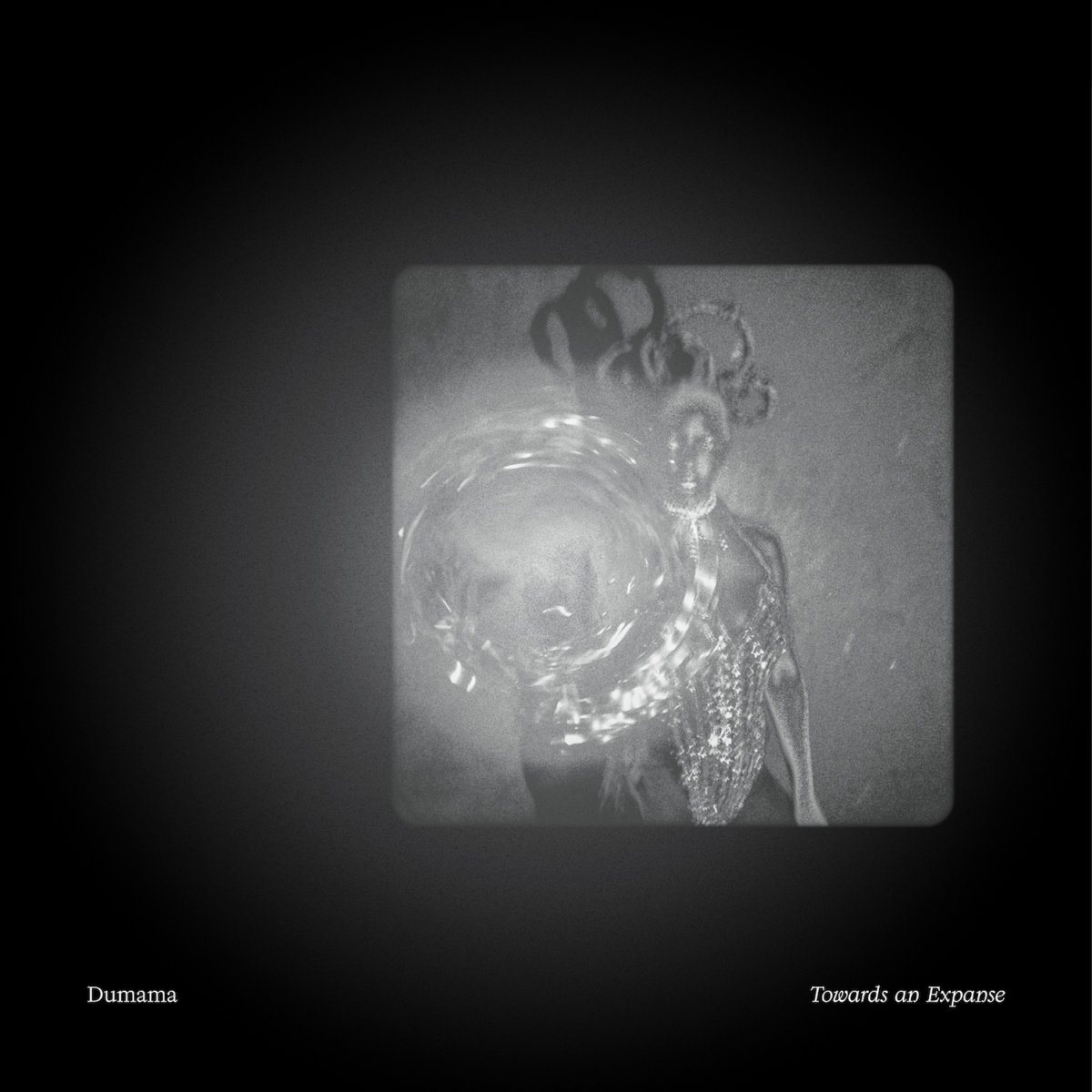
Towards An Expanse began, almost by accident, at Figure 8 Studios in Brooklyn in 2019, where Shahzad Ismaily, a multi-instrumentalist known for knowing exactly when not to play, helped shape the earliest sketches. The songs then sat unfinished until a three-week production workshop in Johannesburg with the arranger Nandi Ndlovu forced them into focus, with Dion Monti handling vocal production and Andrew Curnow, of the Johannesburg label and studio Mushroom Hour, incubating the sessions before Duma carried the whole thing to Berlin to mix. The finished record comes out on Soundway Records.
What she's made resists being filed anywhere tidy. A slow, distorted funk bassline sits under chant and half-spoken verse; gospel harmony gives way to ambient wash and post-punk austerity within a single track. It is built, she has said, around Black ontological ideas of circular time, and around the harder work of living with damage while reclaiming some say over how Black life gets remembered. Childhood songs surface inside the noise like something remembered mid-sentence.
The nearest company isn't world music, a category Duma has spent a decade working against, but artists who treat an inherited instrument as a live technology rather than a museum piece: Sudan Archives looping a violin into a genre of one, FKA twigs bending R&B until it barely holds its shape. The uhadi, in Duma's hands, works the same way. It's not accompaniment. It's the whole argument.