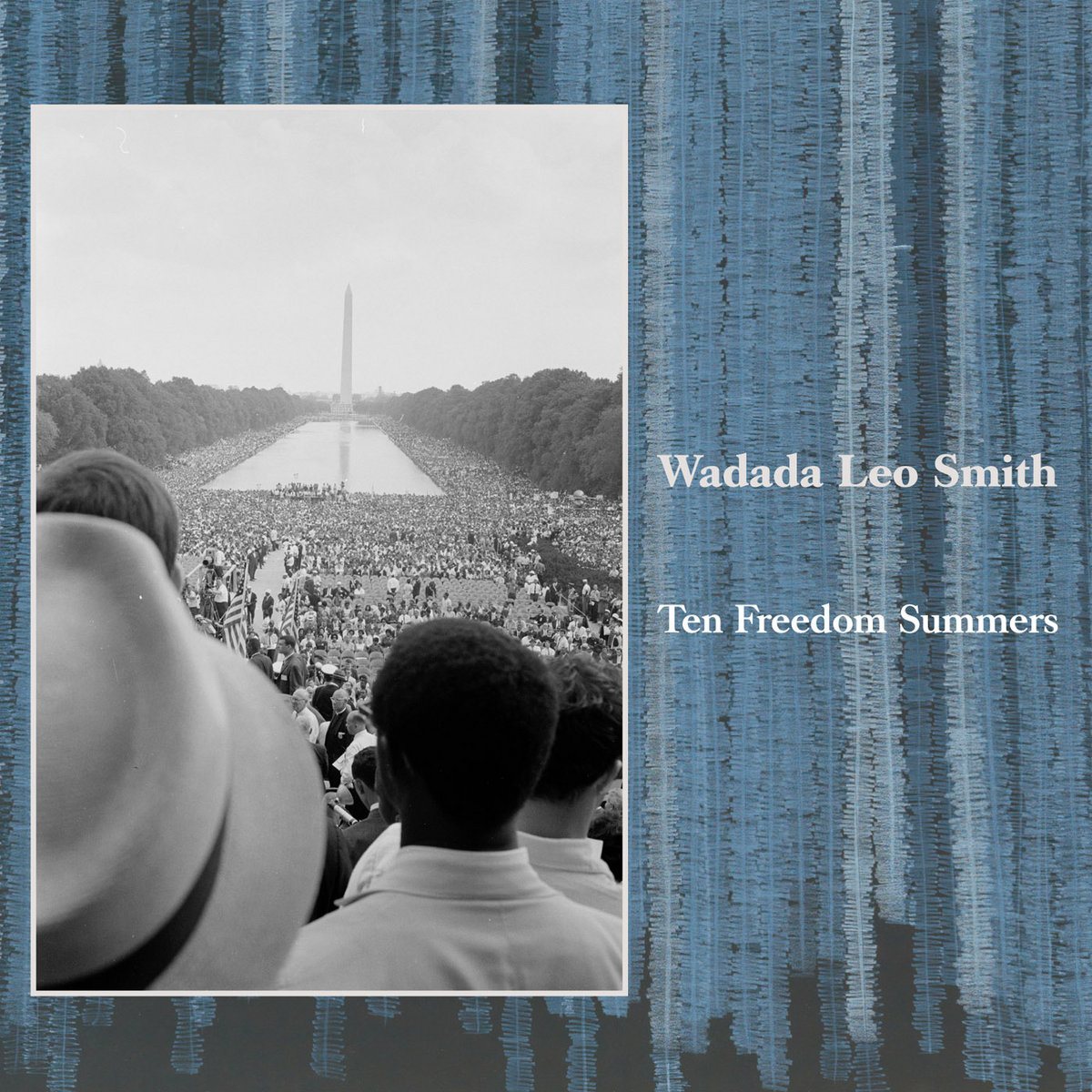
Wadada Leo Smith does not arrange history into a neat procession. On Ten Freedom Summers, dates collide, names recur like pressure points and the trumpet can sound less like a narrator than a witness refusing to leave the room.
The scale is formidable: four discs, 19 compositions and roughly four and a half hours of music, released by Cuneiform Records in May 2012. Smith began the cycle with Medgar Evers: A Love Voice of a Thousand Years' Journey for Liberty and Justice, completed in 1977, then developed the larger work across decades. Its subjects range across the long struggle for Black freedom and equality before the law, with pieces engaging figures and events including Dred Scott, Rosa Parks, Martin Luther King Jr and the Civil Rights Act of 1964.
But the achievement is not its quantity. Smith makes political history behave musically rather than illustratively.
The language moves between rigorous written passages and improvisation, placing Smith's Golden Quartet or Quintet beside the chamber ensemble Southwest Chamber Music. Pianist Anthony Davis and bassist John Lindberg share the jazz group with drummers Pheeroan akLaff and Susie Ibarra, while conductor Jeff von der Schmidt directs the chamber players. Harp, strings, clarinet, flute, bass and percussion enlarge the palette without smoothing its edges.
That combination gives the work its peculiar tension. Smith's trumpet can arrive in terse, bright declarations, then withdraw into stretches where strings and percussion seem to hold competing versions of the same thought. Anthony Davis's piano can make the music feel suddenly architectural; elsewhere, silence and isolated gestures leave the listener with no easy emotional cue. The writing is expansive without becoming decorative.
The recorded set comes from performances at Zipper Hall at the Colburn School in Los Angeles on 4–6 November 2011. That live foundation matters. A project conceived on this scale could have hardened into an object of reverence, but the ensemble keeps it unstable: written structures are continually activated by players making decisions in real time.
Smith, born in Mississippi in 1941, has spent decades building a compositional practice in which notation and improvisation are not opposites. Ten Freedom Summers makes that principle inseparable from its subject. History here is structured, but never settled.
In 2013, the Pulitzer Prize jury named the work a finalist in Music, recognising its fusion of composed and improvised passages around key moments in American civil-rights history. The citation fits, but the music resists being reduced to institutional recognition. Its real force lies in the way fifteen musicians turn memory into motion.
Ten Freedom Summers asks for time, concentration and repeated listening. It gives back something rarer than a history lesson: a sense of history as unfinished sound.