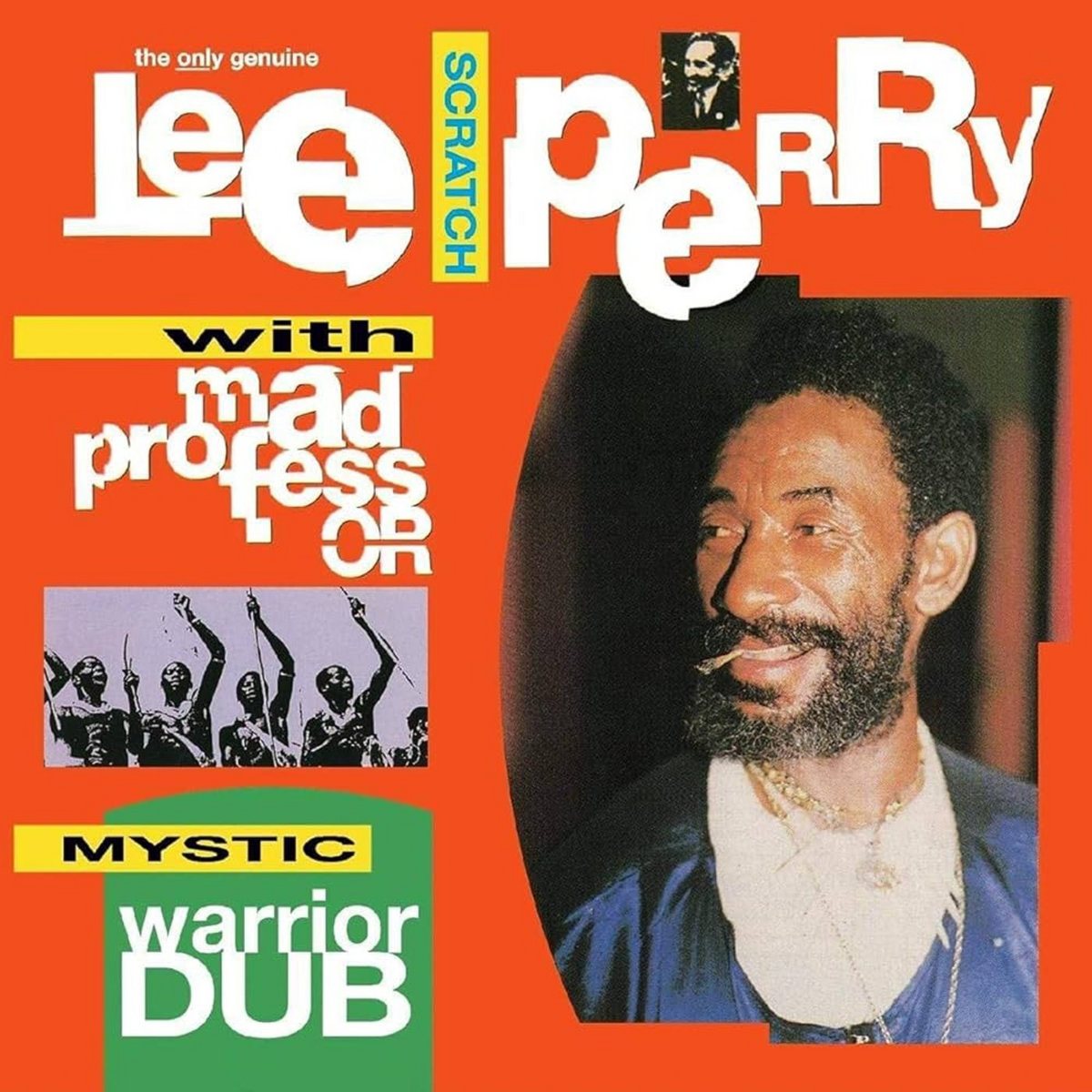
Lee Perry burned down his own studio, and reggae has never quite settled whether to call that an accident or a statement.
By the time he was spending long stretches in London in the early Eighties, the Black Ark was gone, torched in Jamaica in 1979, taking with it a decade of the strangest, most inventive production reggae had produced. Perry kept moving and kept recording, in the same cryptic, self-mythologising register that made him both famous and difficult to work with. Neil Fraser, running his own studio in Peckham under the name Mad Professor, was one of the few producers in Britain willing to have him in the room.
"Nobody wanted to work with Scratch at that time," Fraser has said. "Nearly everyone else thought he was a madman." Fraser didn't share the reluctance. "I learned a lot from him because he's a genius."
The two of them recorded together at Ariwa in 1984, backed by the same house players cutting Ariwa's lovers' rock hits at the time: Black Steel on bass and guitar, Drumtan Ward and the Robotiks on drums, the Upsetters supplying backing vocals, a small nod to the name of Perry's own old Jamaican band. What they made then sat unreleased for five years. When it finally surfaced in 1989, it came as two records rather than one: Mystic Warrior, the vocal set, and this, its dub companion.
Dub Them Crazy and Dub The Past strip the source songs back to rhythm, echo and the odd stray vocal fragment, the horns and keys reduced to pieces Fraser can throw around the stereo field at will. Mystic Warrior Dub itself and Jazzy Dub lean further into the spacious, echo-drenched sound Fraser had already made his signature on his Dub Me Crazy series, but with Perry's presence pulling the whole thing somewhere odder than Fraser's solo work usually went.
Perry died in 2021, at eighty-five, having spent the four decades after the Black Ark fire proving that losing a studio was not the same as losing an imagination. Mystic Warrior Dub is a minor entry in a very long catalogue, but it catches something specific: two producers from different islands and different generations of dub, working out, track by track, how much room was still left between song and noise.