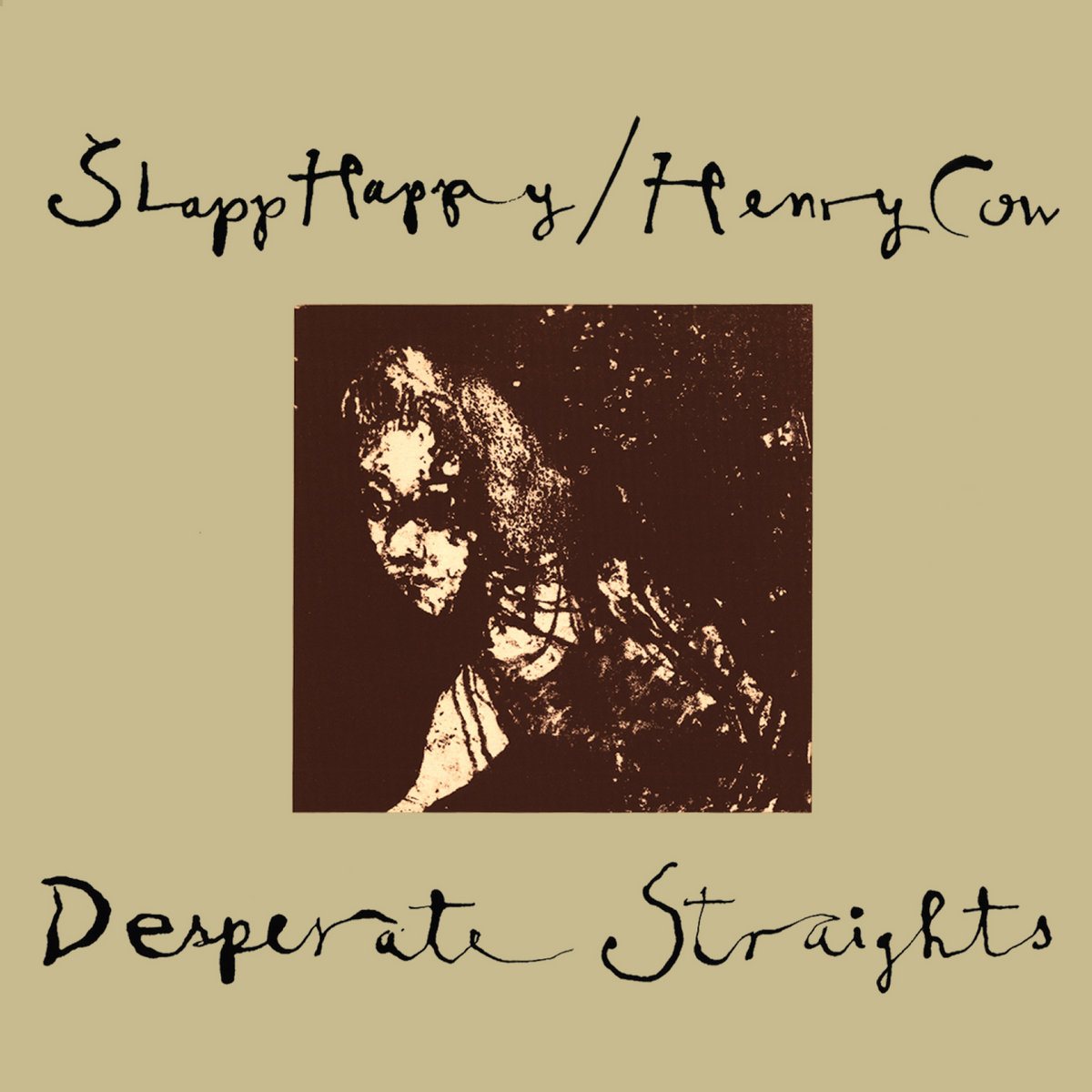
In November 1974, Slapp Happy — a trio built for tunes rather than time signatures — booked a fortnight at the Manor Studio in Oxfordshire and invited a considerably more difficult band to back them on their next record. Henry Cow said yes. By the time the sessions wrapped at Nova Sound in London, the balance of power had quietly inverted: the tidy pop group had been absorbed into the sprawling, contrapuntal machine gathered around it.
Henry Cow had been building that machine since 1968, when Fred Frith and Tim Hodgkinson met in a Cambridge blues club and started rehearsing pieces too knotty for any student function. Virgin signed them in 1973, and Unrest, their second album, released the following May, barely bothered with vocals at all, favouring overdubbed fragments and free improvisation over anything like a chorus. By 1974 the line-up ran through Chris Cutler on drums, John Greaves on bass and piano, Lindsay Cooper on bassoon and oboe, and a rotating cast that had already taken in Geoff Leigh, Peter Blegvad and Georgie Born.
Nobody joined Henry Cow to become famous.
Desperate Straights, released in February 1975 on Virgin, is that machine learning to write songs rather than only structures. Dagmar Krause sang, in the clipped, faintly Brechtian delivery she had brought over from Slapp Happy, across arrangements that kept threatening to dissolve into improvisation and never quite did. "Some Questions About Hats" and "Europa" hold a tune the way cupped hands hold water; "Caucasian Lullaby" runs past eight minutes without once turning into a jam. Frith's guitar and violin, Hodgkinson's clarinet and piano, and Anthony Moore's own piano argue with each other rather than accompany.
The merger didn't survive its own success. In Praise of Learning, recorded that spring, pushed further into agitprop — a John Grierson line about art being a hammer rather than a mirror printed on the sleeve, lyrics quoting Mao's Long March — and Blegvad and Moore left the moment it was finished, unwilling to follow the band that far left. Krause stayed, and her voice became the one most listeners associate with everything Henry Cow recorded afterward.
What the band leaves behind, across this record and the ones either side of it, amounts to a working definition of art rock that owes nothing to jazz chops or classical borrowing: music built almost entirely out of refusing the available shortcuts. The same restlessness led Henry Cow, three years later, to organise the Rock in Opposition festival before splitting that summer. Desperate Straights, for all its political company, is the closest they ever came to something hummable, and it still isn't very close.