The heaviest instrument on Carboniferous is sometimes a saxophone. Luca T. Mai’s baritone does not decorate Zu’s rhythm section or provide jazz credentials; it behaves like distorted architecture, locking into Massimo Pupillo’s bass until the two become difficult to separate.
Zu formed in Ostia, on the coast of Rome, in 1997. By 2009, the trio of Mai, Pupillo and drummer Jacopo Battaglia had already built an extensive catalogue through a working method that treated collaboration and touring as part of the music itself. Their records had connected them with players including Eugene Chadbourne, Mats Gustafsson and Fred Lonberg-Holm, while the basic Zu format remained stubbornly unusual: baritone saxophone, bass, drums and electronics, with no permanent guitar.
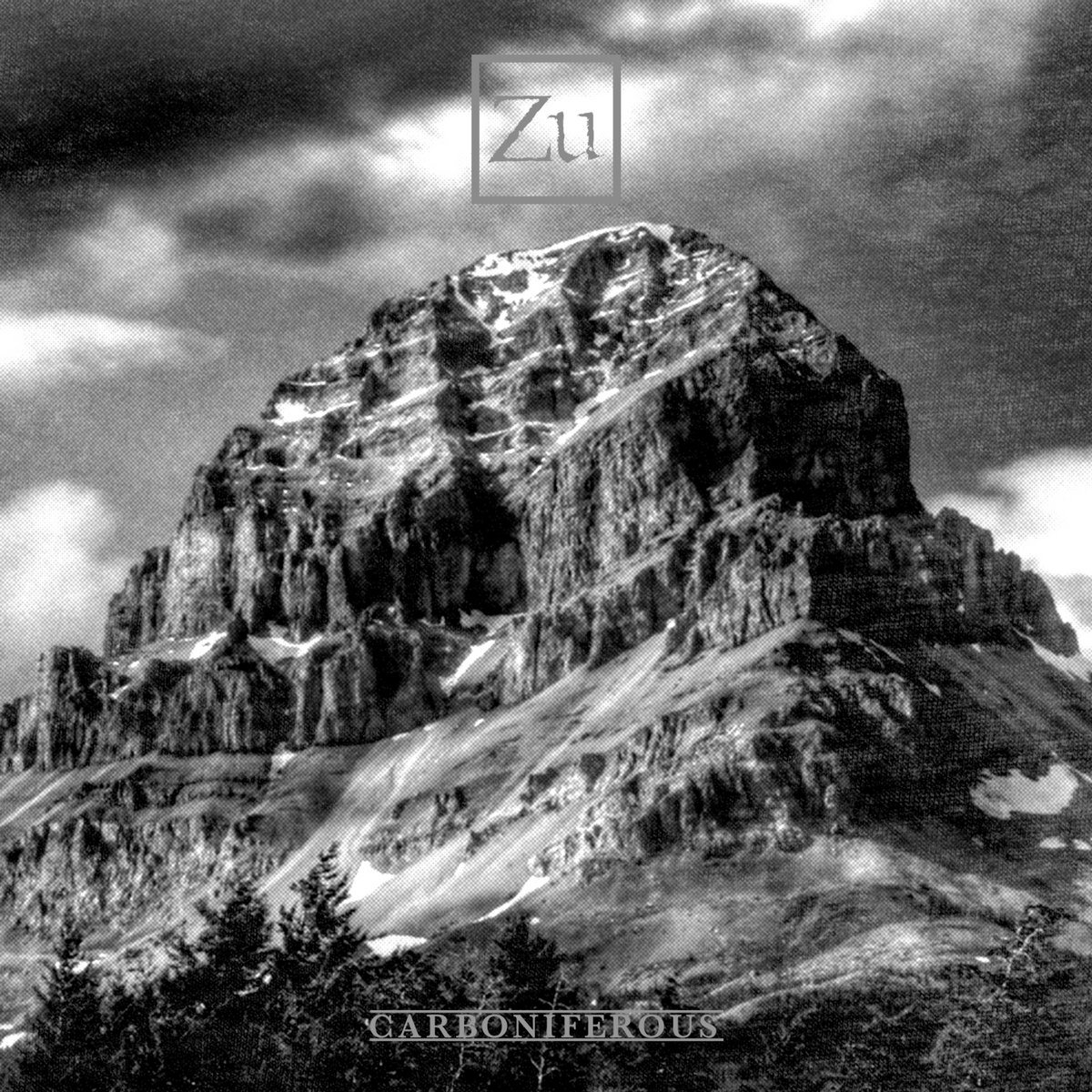
Carboniferous became their first album for Ipecac Recordings in 2009. It is an effective introduction because it makes the band’s contradictions unusually clear. The playing is precise but rarely clean. Rhythms arrive with the blunt force of metal, then turn at angles associated with math rock or progressive composition. Mai can sound like a horn section reduced to one damaged pipe; Pupillo uses distortion to turn bass into both foundation and attack; Battaglia’s drums keep the structures mobile even at their most punishing.
The opening Ostia makes that grammar immediate. There is no need for a conventional lead instrument because all three musicians are pushing at the front of the mix. On Chthonian, Melvins guitarist Buzz Osborne enters without making Zu suddenly sound like a guitar band. His part thickens an already dense system rather than reorganising it around a riff.
Guests have to enter Zu’s world on Zu’s terms.
Mike Patton appears on Soulympics and Orc, contributing voice and electronics. His presence makes historical sense — Patton’s appetite for music between hardcore, experimental composition and theatrical noise overlaps naturally with the trio — but the important point is that Carboniferous never becomes a showcase for him. Even a recognisable voice is absorbed into the machinery.
The album’s ten tracks repeatedly move between compression and space. Carbon and Erinys are relatively concise; Chthonian and Obsidian stretch beyond six minutes, giving texture time to accumulate. Electronics and Battaglia’s additional sounds widen the trio without softening its physical impact.
Zu have spent their career being filed under jazz, metal, noise, prog and experimental rock. Carboniferous explains why none of those categories survives contact intact. The band are not balancing genres. They are using whatever creates pressure, then engineering the pressure into form.