In 2020, with the world stalled, Mary Halvorson finally let herself try something she had been putting off for years. "Writing for string quartet has always been a dream of mine," she has said, "but something that seemed intimidating and somehow out of reach."
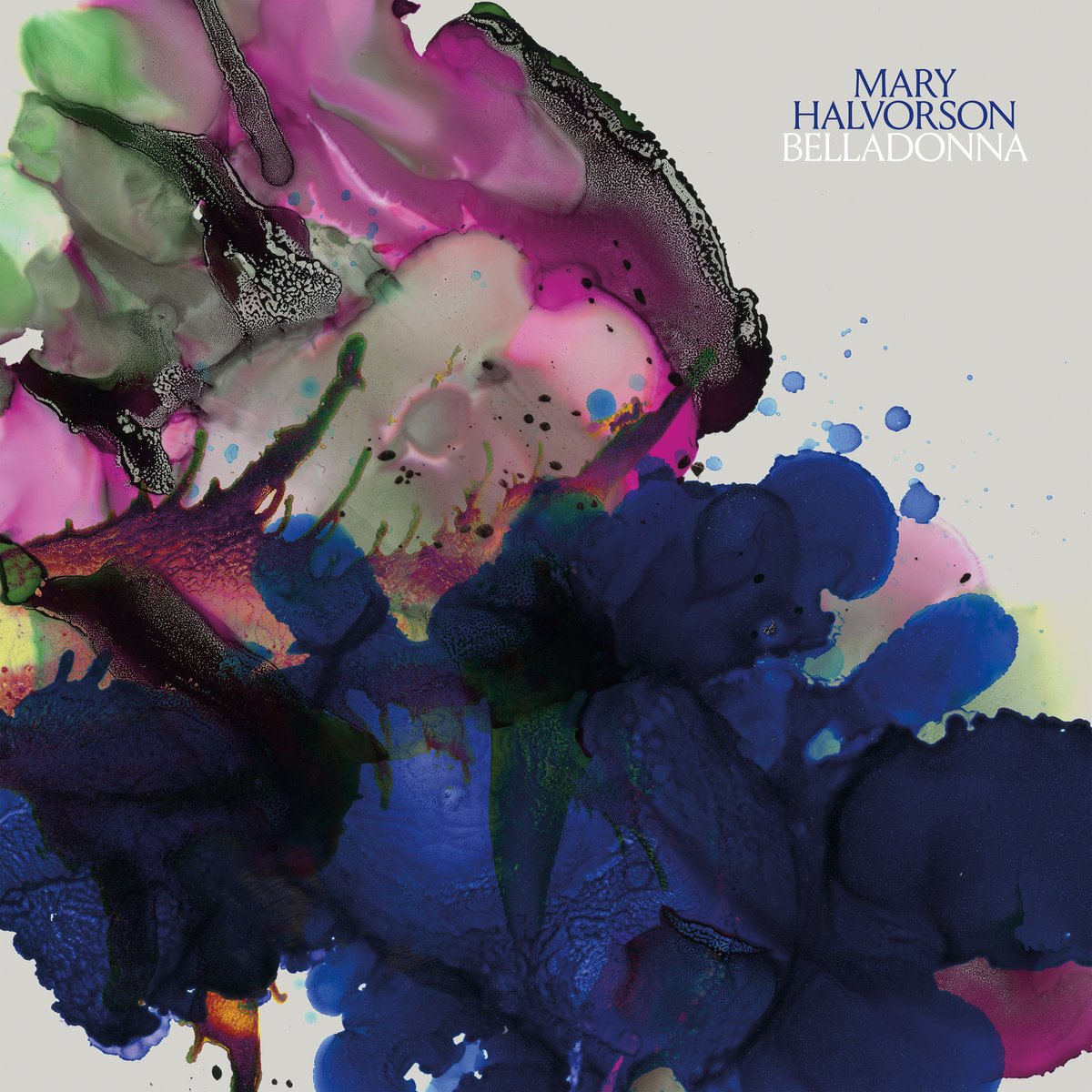
The result, Belladonna, arrived in May 2022 as her debut for Nonesuch Records: five compositions for guitar and the Mivos Quartet, violinists Olivia De Prato and Maya Bennardo, violist Victor Lowrie Tafoya and cellist Tyler J. Borden. It was released the same day as Amaryllis, the sextet suite she wrote around the same time, and the two records were conceived as halves of one project.
By 2022 Halvorson was already the guitarist people meant when they said someone was reinventing the instrument's vocabulary: a MacArthur Fellow, a three-time DownBeat poll winner, running ensembles that ranged from a stripped-down trio to nine pieces. Belladonna was still a genuine first for her, the first time she had written string parts rather than played over them.
Jazz has a long, comfortable tradition of a soloist stepping out in front of a fixed string arrangement, an orchestra or quartet there mostly to cushion the star turn. Belladonna refuses that arrangement entirely.
The Mivos parts are through-composed, dense and often knotted around the same off-kilter intervals that define Halvorson's guitar writing elsewhere, so the quartet argues with her rather than accompanying her. On the ten-minute "Haunted Head" the strings shadow her lines closely enough to blur where the composition ends and the improvising starts; on "Moonburn" they behave more like a fifth voice in an unusually literate rock band than a classical ensemble backing a soloist.
Halvorson has described the two Nonesuch albums as modular, built so the pieces "can exist separately or come together as one large ensemble," and true to that, three Amaryllis pieces later absorbed the same string writing. Belladonna is the more intimate half of that design: no trumpet, trombone or vibraphone to fill out the sound, just one guitarist and four string players working out how much tension a quartet can hold before it becomes something else.
It places her closer to composers like Tyshawn Sorey, who move between notated new music and improvisation without treating either as the more serious discipline, than to the jazz-meets-strings records that use a quartet as sweetening. Nothing here is decorative.