Every dub record is a magic trick performed with a mixing desk, and Neil Fraser has been performing it since a screwdriver introduced him to his mother's radiogram.
He was four, in Georgetown, Guyana, convinced a man lived inside the wireless. He took the back off looking for him and found resistors and capacitors instead. His mother sent him to the library to learn what he'd broken.
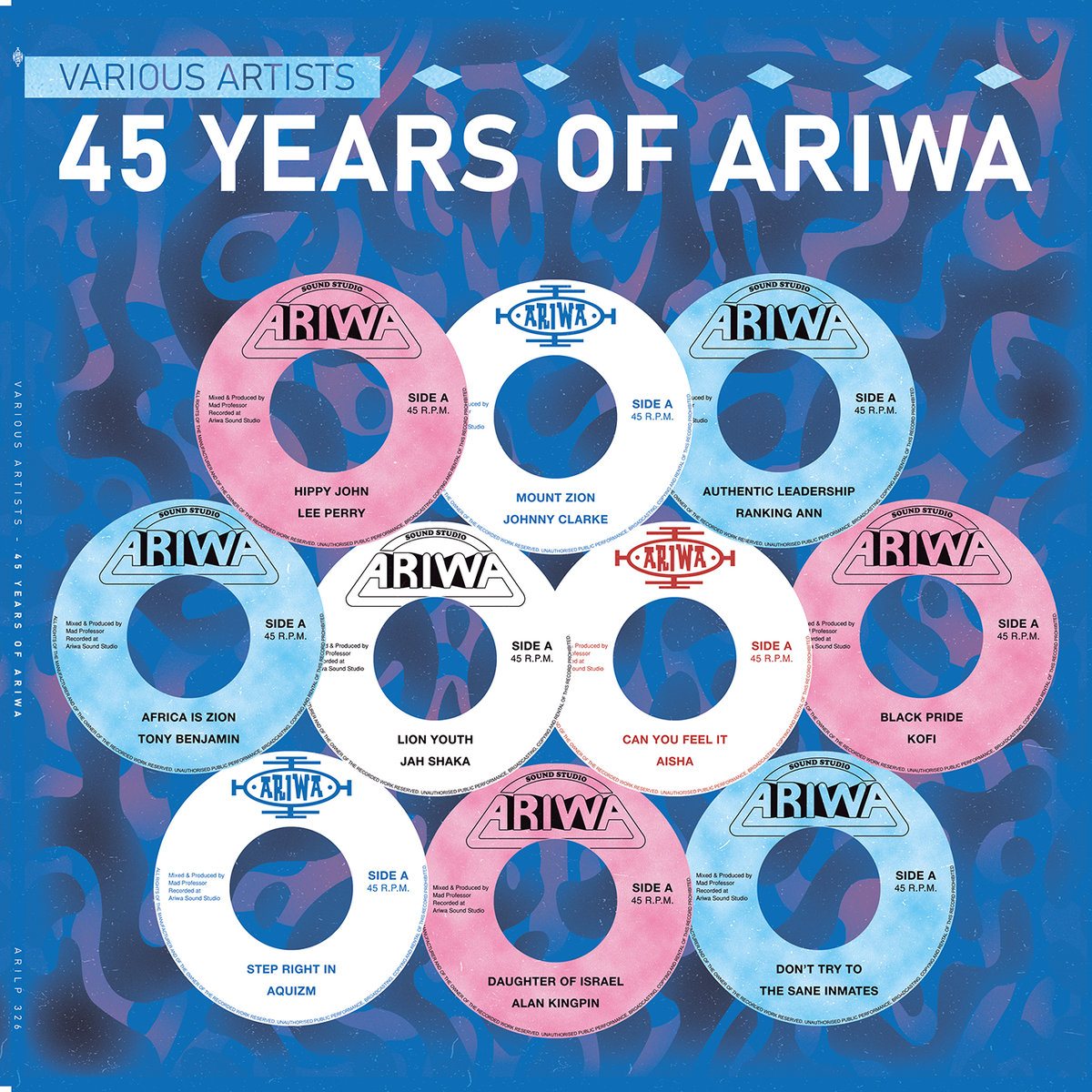
Forty-five years on, by Ariwa's own count, that same curiosity is still the engine of the label and studio Fraser built in a Thornton Heath front room and has run under the name Mad Professor ever since. The proof is 45 Years Of Ariwa, the retrospective the label has just put out on its own Bandcamp page: ten tracks across two sides, opening on Kofi's Black Pride and closing on Ranking Ann's Authentic Leadership, with Aisha, Johnny Clarke and King Pin all present in between — proof enough on its own that dub was never a boys' club at Ariwa.
The pull towards reggae came before London ever did. As a boy in Guyana he wired an old radio to Caribbean stations and caught DJs like the Groove Governor spinning U-Roy and Studio One sides he could hear no other way. He already answered to Mad Professor, a nickname earned from school friends for his habit of pulling machines apart, by the time he reached London at 13. It was there that a copy of Prince Buster's The Message Dub Wise properly floored him. "The drum and bass in these dubs sounded so raw and in your face," he has said of it, and you can trace a straight line from that jolt to every echo unit he's built by hand since.
He built them from magazine schematics: a Tascam 3440 four-track, a Revox G36 for tape delay, an Akai 4000DS wired into homemade outboard, years before he worked a single shift at Soundcraft. King Tubby and Errol Thompson were the heroes; Geoffrey Chung was the engineer he studied hardest. What he took from them wasn't a sound so much as a method: treat the mixing desk as an instrument, and the song as raw material you never stop remaking.
That method is why Ariwa's catalogue runs past 300 albums without repeating itself: lover's rock as tender as Sandra Cross's early sides, dub as heavyweight as anything carrying the Dub Me Crazy name, detours into samba and cumbia nobody would have predicted from a south London studio. It's also why Massive Attack came looking for him in 1995, not for a reggae session but for a producer who could remake an entire album from the desk outward: the result was No Protection, built from tapes sent to Fraser rather than a session the two acts ever shared a room for.
It has never once sounded like a nostalgia act.
This compilation doesn't tidy any of that into one story. It just proves there's a through-line running from a four-year-old with a screwdriver to a studio still standing forty-five years on, still finding new voices to put through the same desk that once carried Sandra Cross and Johnny Clarke.